
Year-End Giving: The Ultimate Guide to Increase Donations
As the holiday season fills the air with cheer, it’s the perfect time to lean into gratitude with your fundraising and capture donor generosity. November and December are the biggest months in the fundraising calendar, making this your nonprofit’s final push to meet your revenue goals. Every effort counts!
To help you raise more, we’ve put together the ultimate guide to increasing donations for your year-end giving campaign. We’ll cover:
First, let’s cover any questions you may have about the year-end giving season.
Why is year-end giving important?
By the last quarter of the year, your nonprofit has a good sense of whether or not you’re on track to meet your annual fundraising goals. It’s time to put the pedal to the metal and make the most of a season filled with gratitude and generosity – to not only reach but exceed your target.
Check out these year-end giving statistics to understand the season’s potential:
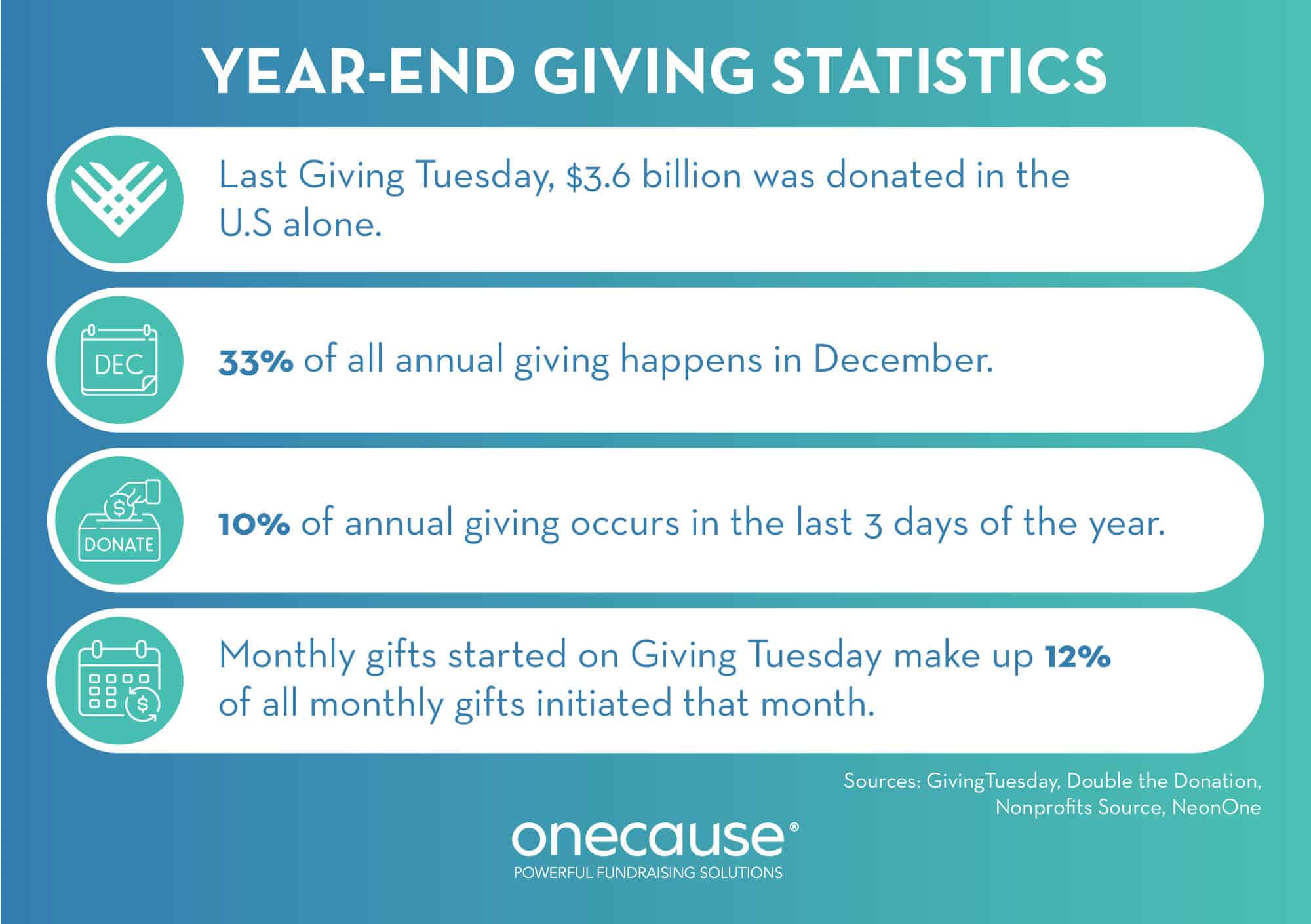
- Last Giving Tuesday, $3.6 billion was donated in the U.S alone.
- 33% of all annual giving happens in December.
- 10% of annual giving occurs in the last 3 days of the year.
- Monthly gifts started on Giving Tuesday make up 12% of all monthly gifts initiated that month.
Although year-end is a powerful giving opportunity, it’s also a crowded one. With so many nonprofits reaching out for support, it’s not enough to just ask. Understanding what motivates donors to give will help you tap into the season’s increased philanthropy successfully.
Why do people make year-end donations?
There’s no single reason people feel inspired to give during the holidays — it’s a mix of heart, habit, and sometimes a little helpful timing. Here are a few common motivators behind year-end generosity:
- Spirit of giving: Since year-end is a season filled with gift-giving, donors are often moved to also give back to causes they care about.
- Raises and bonuses: Many employers increase their employees’ pay at the end of the year, giving them more disposable income to spend on charitable gifts.
- Tax benefits: In the U.S, charitable donations are tax-deductible, which can motivate some individuals to give before December 31 to reduce their taxable income and therefore their tax burden. While the heart leads most giving decisions, this practical incentive can help tip the scales in your favor.
When you approach year-end giving strategically and thoughtfully, you’ll inspire gifts from all kinds of supporters, no matter what drives their generosity.
How do I encourage year-end donors to continue giving next year?
If you attend a holiday party and exchange phone numbers with someone after striking up a good conversation, you’d probably expect a message from them. But what if it never comes? You’d most likely assume they’re not that interested in developing a friendship.
The same principle applies to your nonprofit. The key to turning year-end momentum into repeat or recurring gifts is donor stewardship, defined as the process of building and maintaining relationships with donors.
Ideally, you should already have a stewardship strategy established, but year-end giving is the perfect time to refine it. A thoughtful thank-you, a story about the impact of their gift, or an invitation to stay involved can make all the difference in turning a seasonal donor into a lifelong one. Remember, donor stewardship is about expressing gratitude and highlighting their value and impact on your mission.
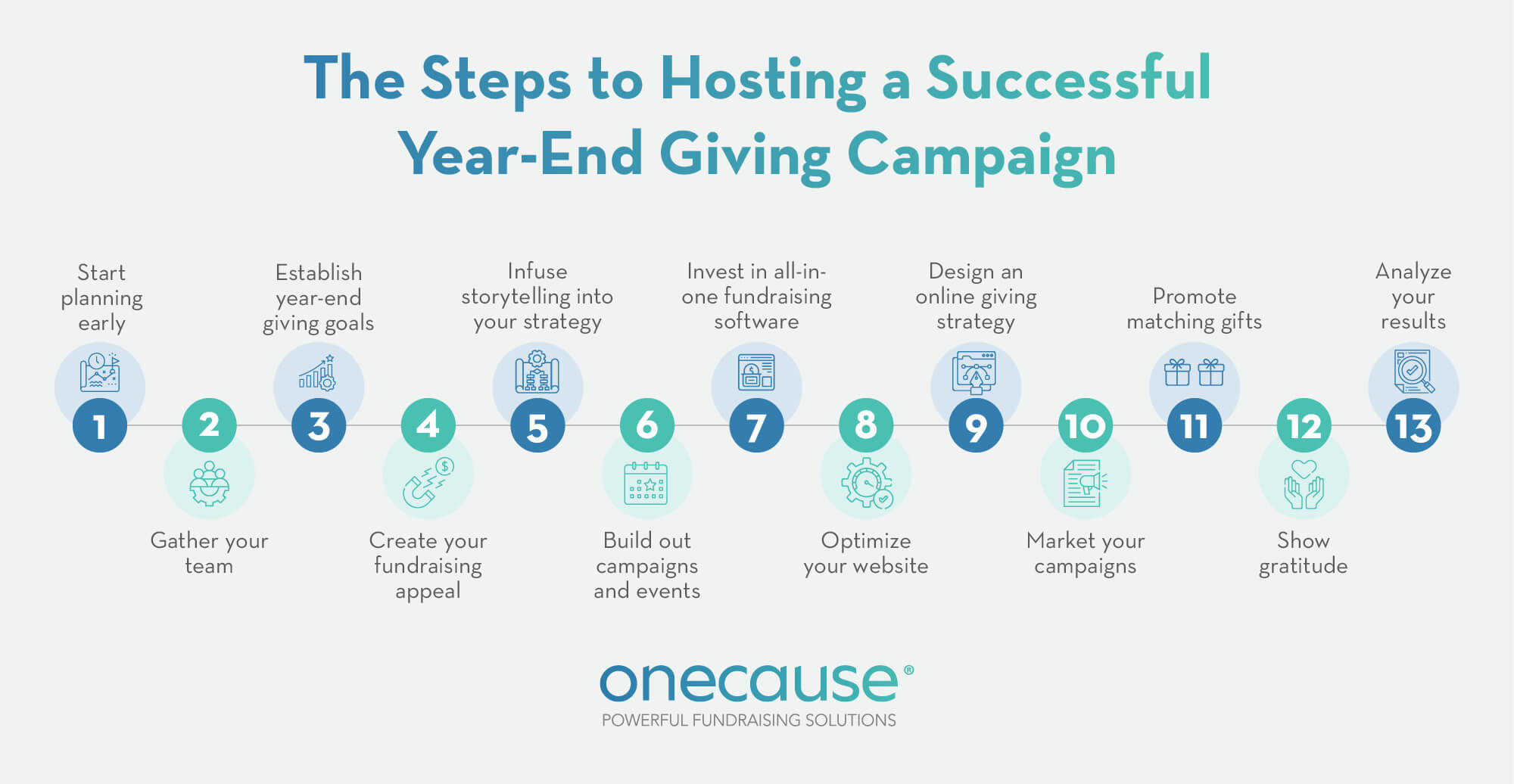
13 Steps to Maximize End-of-Year Giving for Your Nonprofit
Now that we’ve covered the importance of this season, let’s explore how to boost your organization’s year-end giving success.
1. Start planning early
The earlier you start planning, the stronger your year-end results will be. Setting clear goals and getting your message out ahead of the crowd helps your nonprofit stand out during the busiest giving season of the year.
To keep your planning organized and maximize your year-round efforts, follow this timeline:
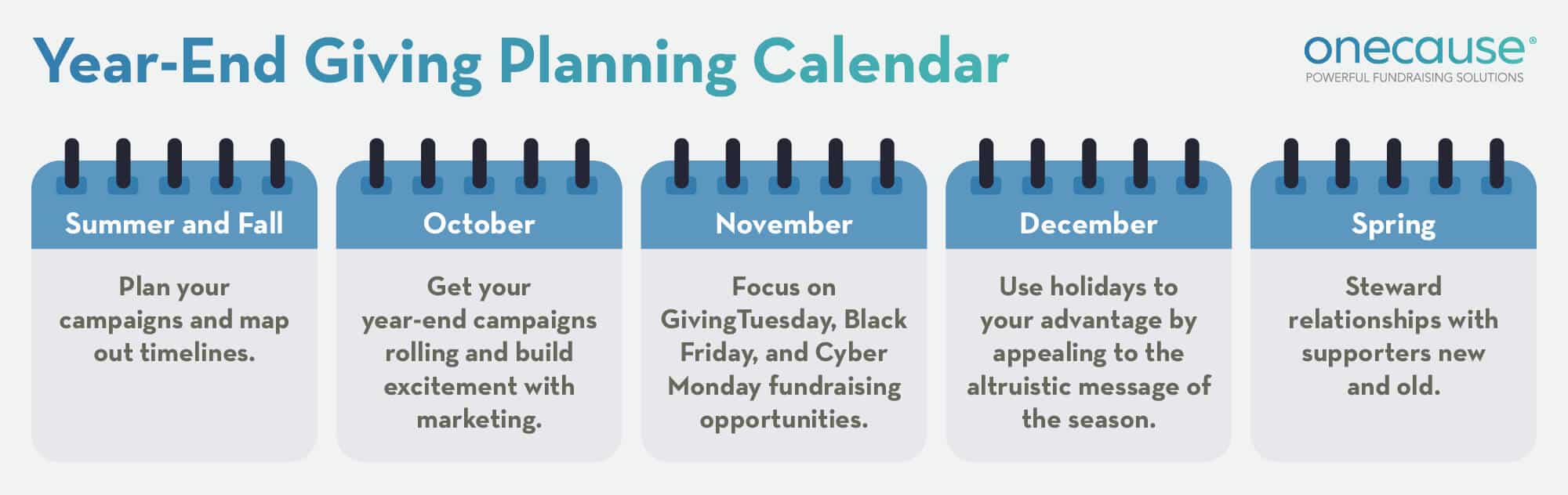
- Summer and fall: Plan your campaigns and map out timelines. This includes implementing new software, setting goals, and preparing your promotion plans to effectively reach your target audience.
- October: Get your year-end campaigns rolling and build excitement with marketing. Share upcoming campaigns and spread awareness early to give supporters time to plan their giving.
- November: Focus on Giving Tuesday, Black Friday, and Cyber Monday fundraising opportunities to inspire action. Consider partnering with local businesses for “give-back” campaigns where a percentage of sales benefits your cause.
- December: Lean into the spirit of the season! Highlight the heart of your mission and the impact donors can make before year-end. Keep engagement going beyond the inbox through social media, storytelling, and gratitude.
- Spring: Steward relationships with supporters, new and old. Start by thanking them for their generosity, share stories to showcase their donations’ real-world impact, and then continue to stay in touch.
Don’t view year-end campaigns as just a way to hit a big donation number. Use this time to spark connections and continue conversations with supporters. As you’re creating a plan, start thinking about how you might:
- Meaningfully engage current donors ahead of the rush
- Capture the attention of new donors sooner
- Educate audiences on their impact
- Share long-term involvement opportunities
- Create urgency in giving and invite supporters to participate
Give yourself plenty of time to strategize for a creative year-end campaign with long-lasting impact.
2. Gather your fundraising team
Planning a fundraising campaign is no small feat, and year-end giving is no exception. Instead of allowing all responsibilities to rest on a single person’s shoulders, gather a team that will work together to ensure the campaign is a success.
When assembling your fundraising team, look for individuals who can fill these roles and their responsibilities:
- Campaign manager: Keeps the big picture in focus. This person oversees the campaign timeline, coordinates across teams, and makes sure everything stays on track.
- Fundraising strategist: Shapes your overall approach — developing creative ideas, refining your messaging, and ensuring your strategy aligns with your mission and goals.
- Financial manager: Keeps a close eye on your campaign’s budget, tracks expenses, and prevents overspending to meet your goals.
- Marketing coordinator: Spreads the word! From your website and social media to email and digital ads, this person ensures your campaign gets in front of the right audiences.
- Event planner: Manages logistics and makes sure everything runs smoothly for both your team and supporters to have the best experience.
Chances are, your nonprofit likely already has people who can step into some of these roles. For anything missing, consider hiring dedicated individuals and event planning teams to take on these tasks. Be sure to leverage your board members to recruit additional volunteers!
3. Establish your year-end giving goals
Setting clear goals is a significant part of any nonprofit fundraising campaign, and it’s especially critical for year-end success.
Before you start planning tactics, take a moment to define what success really looks like for your organization. To help set your goals, answer the following:
- Where did our year-end revenue come from last year?
- How much growth is expected based on year-over-year data?
- Do we have a gift amount goal for new and existing donors?
- Will we incorporate a matching gift campaign?
- What is our overall target for total gifts?
Assessing how your year-end goals fit into the bigger picture of annual fundraising for your entire fiscal year will help guide your goals. Are you counting on the end of the year to bring in the majority of funds? Or are you simply boosting your impact after a strong year?
The clearer and more measurable your goals are, the easier it becomes to rally your team, track progress, and ultimately exceed expectations.
4. Create your fundraising appeal
Even if your nonprofit has loyal supporters who give to your nonprofit year after year, your year-end campaign will also reach people who are learning about your mission for the first time. To connect with both groups, you’ll need a thoughtful, well-crafted fundraising appeal that inspires trust and action.
Your year-end appeal should:
- Communicate why your nonprofit needs donations: What problem are you solving, and why does it matter right now? Be clear about the need — and show why your organization is uniquely positioned to make a difference.
- Focus on the donor’s impact: Help donors see themselves in your mission. Instead of talking about what you need, talk about what they can accomplish. For example, a parent-teacher organization trying to raise funds for a prom might say, “With your donation, we can host a celebratory event that recognizes student achievements and creates lifelong memories.
- Prioritize personalization: Use donor data to make your messaging feel genuine and relevant, whether it’s referencing past support or using data insights to align the appeal with their interests. Personal touches build deeper donor relationships and drive participation.
Most importantly, include a clear call-to-action in your fundraising appeal. Let your donors know exactly how they can help and make it simple to do so. Include donation links or QR codes in your emails, social posts, and printed materials so supporters can give in just a few clicks.
When your appeal is clear, heartfelt, and easy to act on, it removes friction – and makes giving feel as meaningful as it should.
5. Infuse storytelling into your year-end giving strategy
While the primary goal is to raise funds, your year-end campaign should also aim to inspire. Stories are what truly move people to action! They spark emotion, create connection, and help potential donors understand the impact of their support.
In your outreach, use language that creates excitement, urgency, and empathy. Show them who you’re helping, what challenges those communities have faced, and how previous support is already changing lives.
Here are a few ways to incorporate storytelling into your strategy:
- Use real-life stories and testimonials: Feature quotes, photos, or videos from the people you serve. Authentic voices and faces make your mission feel personal and real.
- Define your mission and goals: Keep your messaging consistent across all platforms. A clear mission statement reinforces your purpose and helps donors know exactly what they’re contributing to.
- Leverage impact statements: For example, an animal shelter might include a picture of a cat with a suggested donation amount and say, “Help abandoned kittens like Peanut find their forever home by donating to our shelter this Christmas.”
Back up any stories with additional research and statistics from your latest campaigns. Stats and outcomes help strengthen your narrative – just don’t let the numbers replace the heart. Data validates your impact, but stories are what truly inspire giving. When you pair emotional storytelling with clear results, you’ll create a campaign that connects deeply and compels action.
6. Build out your campaigns, programs, and events
Your nonprofit’s year-end giving team can plan several strategies to increase the success of your end-of-year push. Get creative with smaller campaigns, programs, and events to entice supporters into giving to your organization. Here’s some of the most common ones:
Giving Tuesday
Nearly $3.6 billion was donated on Giving Tuesday in 2024, with 36 million donors supporting at least one nonprofit with a gift. That makes this day of generosity one of the most engaging ways to kick off your year-end efforts.
Held after Cyber Monday, this day taps into the spirit of giving and helps position your nonprofit in the spotlight early. To make your Giving Tuesday campaign stand out, create a dedicated online fundraising page that tells a compelling story and makes it easy to give. Be sure it clearly communicates:
- The need: What problem is your nonprofit addressing, and who or what is affected?
- The solution: Share what donor support will make possible.
- The hero: How do donors play a starring role in creating change? Make them the hero of your story!
Don’t forget to send out marketing materials early to spread the word about your organization’s participation in this global day of giving!
Social Media and Peer-to-Peer Fundraising
With 5.4 billion people active on social media, every share expands your reach and multiplies opportunities for clicks, engagement, and donations. Year-end campaigns that join trending conversations or tap into holiday moments can spread quickly – amplifying visibility, inspiring action, and driving greater fundraising results.
And if you’re already harnessing the power of social sharing, why not take it a step further with peer-to-peer fundraising? This type of campaign leverages your existing donor base to spread the word about your mission and find potential new donors across social media platforms. For end-of-year campaigns, especially around the holidays, peer-to-peer fundraising really shines. It’s personal, authentic, and emotionally compelling, helping new donors connect to your cause through someone they already trust.
One-Time Events
Many nonprofits wrap up the year by hosting special fundraising events alongside their campaigns – and for good reason. Year-end events bring people together, create memorable experiences, and give donors a tangible way to celebrate generosity.
Here are a few event ideas to help you finish the year strong:
- Holiday gala
- Winter charity auction
- Santa walk
- Christmas carol concert
- Holiday movie marathon
- New Year’s Eve party
Events like these are often well attended and financially successful. They’re also the perfect opportunity to open the door to in-person connection and interaction with donors.
7. Boost year-end giving with all-in-one fundraising software.
Elevating your year-end campaign starts with aligning your fundraising goals to the right technology. Today’s donors expect a quick, intuitive, and flexible giving experience – and the best all-in-one fundraising platform is built to deliver just that.
From tracking donations and communicating with donors to showcasing your mission and offering AI-powered fundraising tools, these platforms can make all the difference in your year-end success. The OneCause Fundraising Platform helps nonprofits like yours raise more by making it easy for donors to support you!
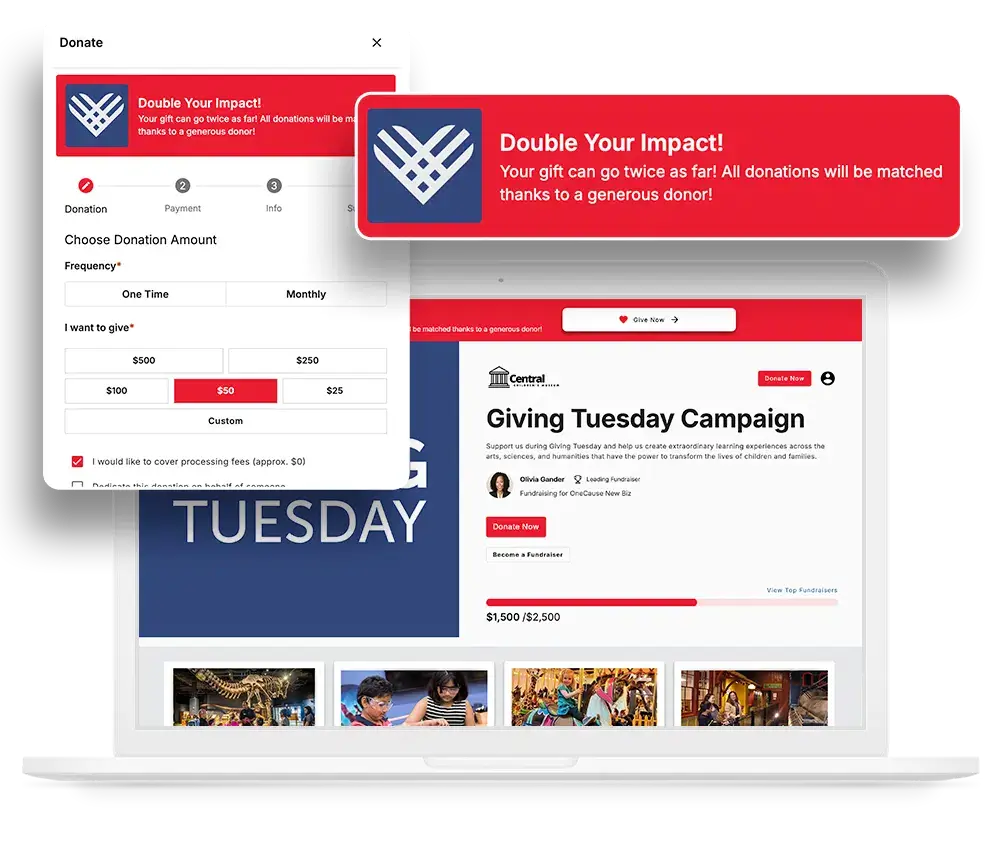
OneCause helps your year-end fundraising team:
- Stay organized with AI-powered tools: Track your planning progress with Event Readiness tasks and Milestones to mark checkpoints and achievements.
- Boost engagement with online giving sites: Offer recurring donations and matching gift programs to drive donations.
- Harness the power of mobile donations: Offer easy donor access and engagement with end-of-year campaigns through mobile-optimized donation forms.
- Communicate with donors through Text2Give®: Update your supporters on your fundraising progress and effortlessly capture donations on the go.
- Empower loyal supporters with personal fundraising pages: Donors can create and customize their own fundraising pages to raise money on your behalf.
- Monitor results and metrics in real-time: Understand progress and track success to share insights with your team and supporters.
With the right platform in place, your team can focus less on the backend and more on creating meaningful connections. If you’re looking for a top provider who can help make this your best year-end campaign yet, OneCause is ready to help.
8. Optimize your website and donation page
Your online giving site is the cornerstone of your year-end giving strategy, so it really needs to shine! A well-designed website and donation page that highlights your mission and simplifies giving will set the stage for a successful end-of-year campaign.
Follow these tips to optimize your donation page:
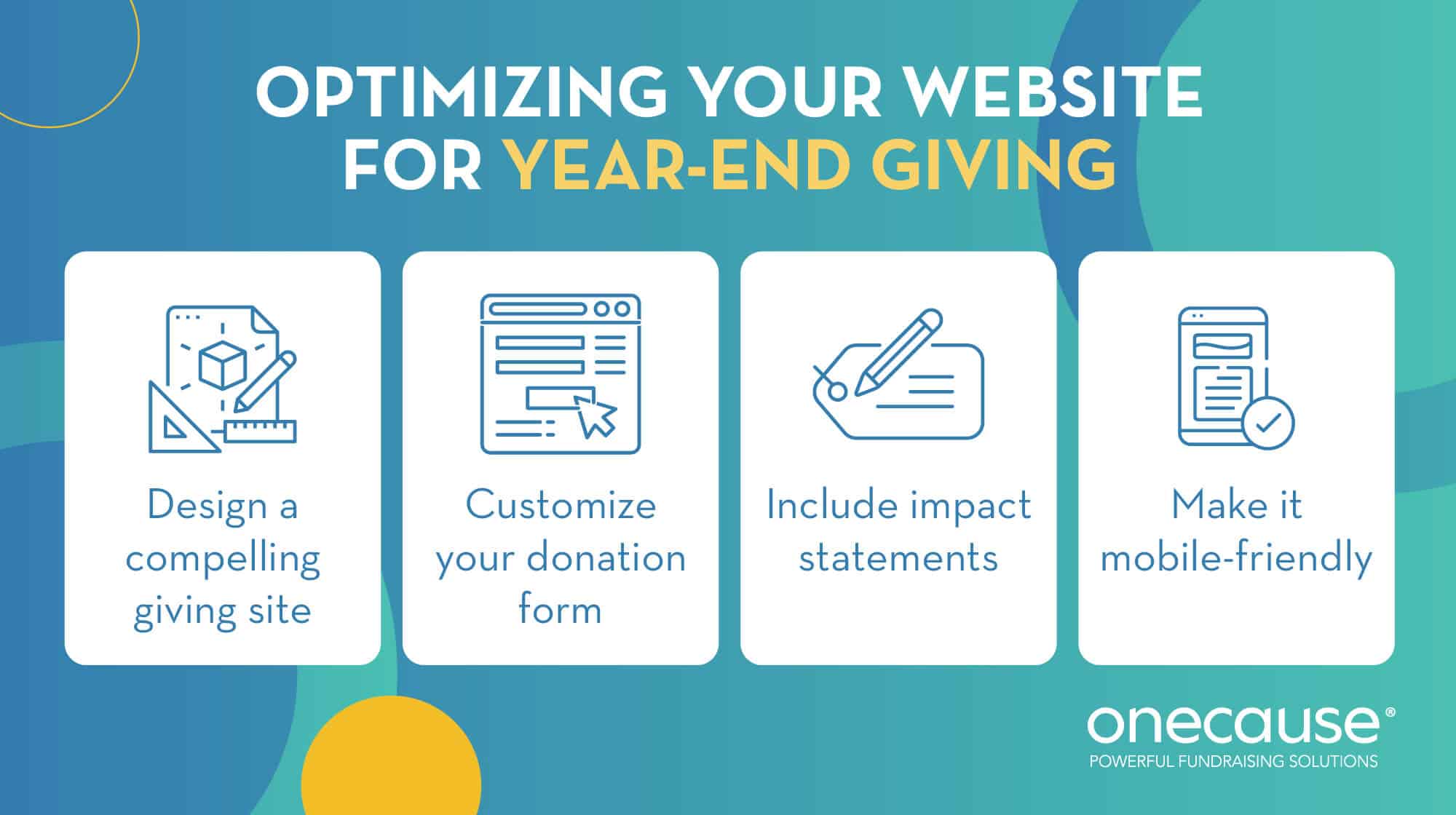
- Design a compelling giving site: Keep your page visually aligned with your brand and focused on clear, inspiring calls to action that guide donors to give.
- Customize your donation form: Ask only for the essentials. A quick, easy form removes friction and helps more supporters complete their gifts.
- Include impact statements: Communicate how each suggested donation amount makes a difference by explaining what it tangibly supports.
- Make it mobile-friendly: Optimize your donation page for all devices to provide the best giving experience and maximize gifts.
Your giving page should not only attract donors but also inspire them to act. Implementing these steps can create a significant impact on your revenue and enhance fundraising efforts not just during year-end giving but throughout the year.
9. Design an online year-end giving strategy
Standing out during a crowded year-end giving season means making the most of your online presence and turning supporters into your biggest advocates. With 31% of social donors finding out about a donation opportunity through social media, it’s essential to evaluate your online presence by asking:
- What social platforms do you have the most followers on? Are you using them to their full potential? If not, consider launching a social media campaign focused on reaching and connecting with new followers.
- What is the conversion rate on your giving page? If it’s lower than expected, optimize using best practices for conversion. Try simplifying the form, reducing the number of required fields, using suggested giving amounts, adding compelling impact statements, and ensuring the page is mobile-friendly.
- Have you created a seamless giving experience? Whether your supporters are visiting your website or giving site, is the donation process simple? If not, see how OneCause can help.
Once optimized, amplify your online reach with a small budget for paid social promotions to add extra buzz to your campaign. Targeted ads can boost visibility, reach new audiences, and drive more donations from the supporters most likely to give.
To take things a step further, motivate donors to share your cause with their networks by sparking friendly competition for rewards and incentives. Incorporating gamification through leaderboards or challenges will bring more fun to your campaign while encouraging ongoing participation.
10. Market your end-of-year giving campaigns.
Marketing isn’t just about promotion. It’s also about connection! People are far more likely to support a cause when they feel like they’re part of something bigger and see others rallying behind it.
To keep your campaign energy high through December 31, show up where your supporters are. A multi-channel approach creates more touchpoints, more engagement, and more chances to inspire generosity.
Consider building a multi-channel marketing strategy that includes the following channels:
- Website: Tell a compelling story about your mission and make your donation form easy to find (and even easier to complete).
- Email: Target your audience with personalized messaging that includes eye-catching subject lines and clear calls to action.
- Direct mail: Mix old-school with digital! Send creative postcards or save-the-dates that promote giving days or campaign milestones.
- Social media: Grab attention with engaging videos, donor spotlights, and content around your mission’s impact.
- Text marketing: Use our templates to send quick updates when giving opens, share fundraising progress, and celebrate milestones with supporters in real time.
- Ambassadors: Turn loyal supporters into active fundraisers to boost campaign awareness and help raise money for your cause.
Behind it all, a strong communication plan keeps everything well-connected. Remember, be clear about what your year-end goals are, why they matter, and how supporters can help.
11. Promote matching gift opportunities.
Doubling donations is easier than you think. Matching gifts give donors a simple way to amplify their impact while helping you reach your year-end revenue goals.
To encourage participation, include matching gift information right on your giving page. Outline the steps donors can take to submit their match request with their employer and make it easy for them to follow through.
Don’t forget to talk about matching gifts in your fundraising appeals and emails, too. Mentioning the opportunity can increase average donation size by 51%. That’s a big return for a small addition!
And of course, celebrate every match that comes through. Send a personal thank-you note or share the real-world impact of their doubled gift. With a thoughtful promotion plan and genuine appreciation, matching gifts can turn into a powerful year-end win for your mission.
12. Show gratitude to supporters
As your year-end donations begin rolling in, make time to show a little extra love to your donors. Sending personal, timely gratitude messages strengthens your connections and keeps the support coming.
Here are a few meaningful ways to show your appreciation:
- Send a personalized message from your team or beneficiaries to say thank-you.
- Recognize donors on your website or newsletter for their support.
- Shout out particularly generous donors at your year-end fundraising event.
- Send handwritten notes with a small gift to donors who gave above a certain level.
- Make phone calls to major donors and sponsors who supported your year-end efforts.
When you follow up with donors after the gift, you show them how valuable they are to your nonprofit’s community. When showing gratitude to supporters, highlight how those gifts are being used or how they’ll help your cause in the coming months.
13. Analyze your year-end giving results
The work continues even after all year-end donations are made! Your team just spent weeks developing and executing a fantastic year-end campaign, but how do you know it went well? It’s time to dive into your data!
Your campaign data tells the story of what worked, what didn’t, and how your efforts stacked up against your fundraising goals. Focus on both performance metrics and donor behavior to get a full picture of your year-end efforts. Track and analyze these key indicators to get more insight:
- Total funds raised
- Average gift size
- Donor types, including first-time and repeat
- Engagement metrics, such as email opens and clicks
- Social media reach by organic impressions and new followers
- Communication effectiveness across different groups and messages
When going through your data, celebrate what went well and capture your lessons learned while they’re fresh. Small insights now can lead to big improvements next year.
Additional Year-End Giving Resources for Your Nonprofit
Year-end is your moment to shine and rally your community with an extra dash of generosity in the air. Use this guide as a launchpad to reach your best end-of-year giving season yet! Every nonprofit is unique, so tailor your strategy to what works best for your audience and aligns with your mission.
If you want to explore more ways to increase donations, check out more year-end resources:
- Year-End Fundraising Campaigns: 10 Ideas + Real Examples: Stand out from other nonprofits with a creative year-end campaign to help you raise more.
- Creating a Standout Awareness Campaign: A Complete Guide: Educate your community about your nonprofit’s mission with an impactful awareness campaign.
- 10 Ways to Leverage AI for Giving Tuesday & Year-End Fundraising: Save time and streamline efforts by exploring how AI can help your nonprofit do more with less.
About the Author

Sarah Sebastian
Director, Corporate Communications
Sarah Sebastian is the Director of Corporate Communications at OneCause, a fundraising software company that helps nonprofits raise more and reach more donors. She leads the company’s research initiatives and co-chairs the programming committee for the annual Raise fundraising conference. A former teacher and literature major turned nonprofit tech professional, Sarah brings a deep love of language and learning to her work. With more than a decade of experience in nonprofit technology, she specializes in...