The Secret to Successful Nonprofit Event Management: A Guide
If your nonprofit has ever hosted an event, you know it’s more than just a gathering. Events present a ton of opportunities, like engaging supporters, promoting your mission, and, of course, raising essential funds. In fact, a whopping 95% of nonprofits held at least one fundraising event last year.
But turning those opportunities into real results takes more than enthusiasm; it requires organization, creativity, and strategy.
That’s where effective nonprofit event management comes in. It’s the art (and science) of planning, executing, and evaluating an event so that every detail works toward your goals and every attendee walks away inspired. This guide breaks down the essential steps and resources you need for success, including:
- Popular Questions About Nonprofit Event Management
- How to Approach Nonprofit Event Management
- 5 Nonprofit Event Management Software Solutions to Consider
Once you’ve learned the ins and outs of nonprofit event management, you’ll be ready to get the ball rolling. We’ve got you covered there, too! Check out our Event Day Survival Kit for extra support with your next fundraiser.
Popular Questions About Nonprofit Event Management
What is Nonprofit Event Management?
Nonprofit event management refers to the behind-the-scenes coordination of a mission-driven event, such as a silent auction, virtual campaign, or any other type of function. It’s a comprehensive effort that covers every phase of the event, from initial planning to event-day logistics to post-event follow-up.
The goal of event management is simple: make sure the event achieves your organization’s objectives. For example, if you’re hosting an auction to fund new equipment for your nonprofit’s facilities, strong event management keeps fundraising costs low, maximizes event revenue, and engages donors for future support.
Why is Event Management Important for Nonprofits?
Effective event management directly impacts your nonprofit’s success in several key areas:
- Donor engagement and retention: A smooth, thoughtfully run event strengthens supporters’ bond with your cause and inspires a sense of community. Even event attendees agree — around 55% of Americans believe that events spark feelings of connection.
- Revenue growth: Streamlined management, especially for complex tasks like mobile bidding and ticket sales, maximizes your fundraising efficiency. In fact, 77% of nonprofits saw consistent or increased revenue from auction events last year.
- Brand awareness: Events put your nonprofit’s brand directly in front of supporters and the broader community. Considering that 77% of consumers trust a brand more after interacting with it at a live event, this presents an opportunity to secure attendees’ long-term support.
What Resources Do Nonprofits Need to Plan Events?
Successful event management has high stakes. Getting it right requires a strong plan and the right tools. Some resources you’ll need include:
A Planning Checklist and Event Calendar
Don’t underestimate the power of a well-structured, step-by-step event management process. Writing out a clear checklist that all team members can reference ensures you don’t miss any logistical steps. Plus, it helps you manage the complexity of numerous moving parts.
Set concrete deadlines for planning milestones, marketing pushes, and vendor contracts ahead of the official event date.
Dedicated Fundraising Software
4 in 10 nonprofits plan to invest more in in-person event fundraising tech. You should be planning to do this, too! The right tools will simplify everything from registration and ticketing to donor data management – freeing your team to focus on the people attending your event.
Nonprofit fundraising software will support event management best when it includes:
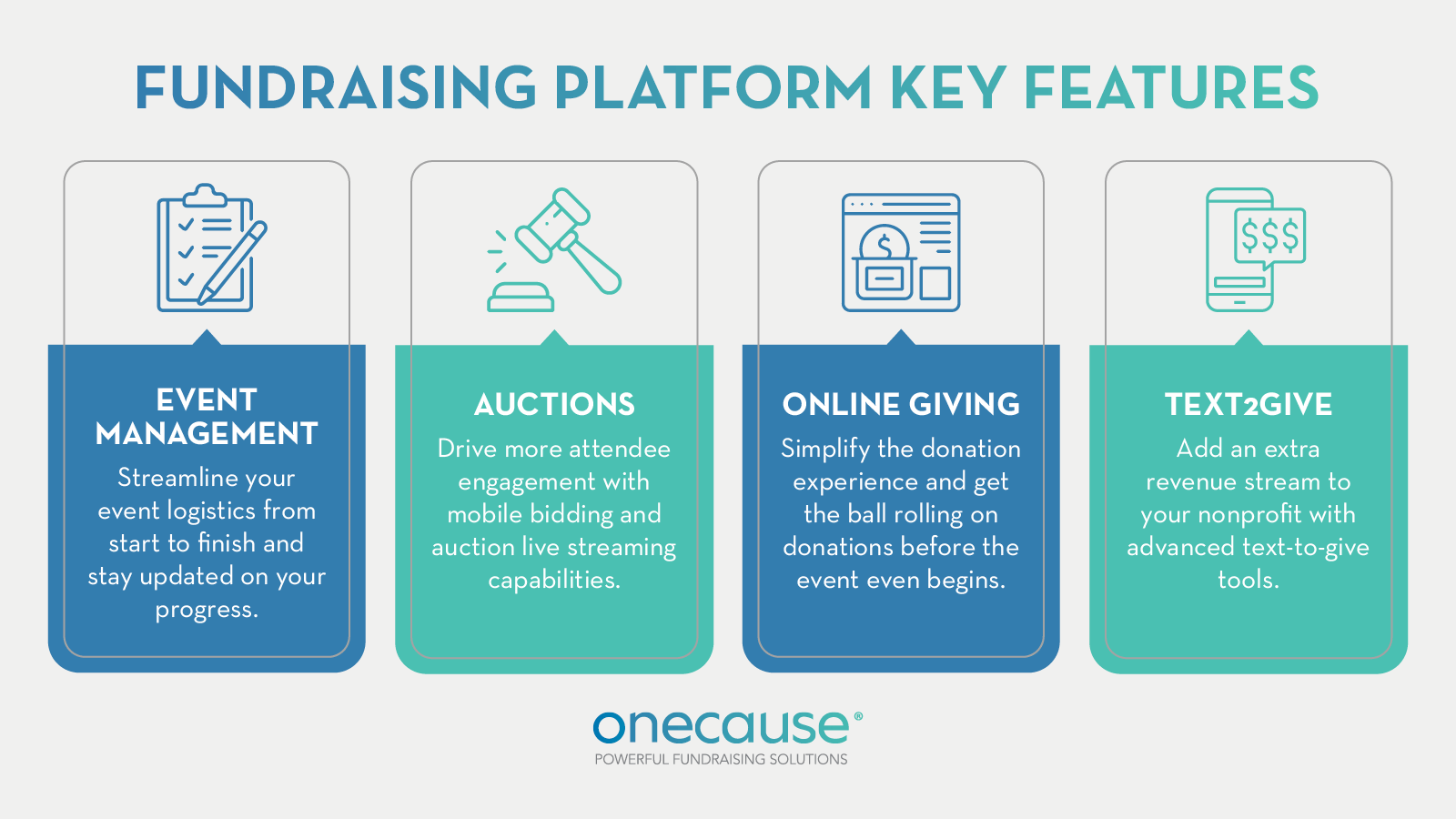
- Features purpose-built for event management
- Auction capabilities, like mobile bidding and livestreaming
- Online giving tools that provide a simple donation process
- Text-to-give to add an extra revenue stream to your event
The OneCause Fundraising Platform, for instance, provides tools such as mobile bidding, online giving pages, and real-time analytics designed to maximize earnings and provide a seamless supporter experience. We’ll cover more about event management software later, but it’s something to keep in mind before you start planning, since onboarding and implementation may take time.
Event Planning Team and Volunteers
Whether you rely on in-house staff, a team of dedicated volunteers, or a combination of both, you need to establish clear roles and responsibilities for everyone involved in bringing your event to life.
Staff members will have more defined roles that align with their day-to-day duties, while volunteers can pitch in where needed. Here are a few examples of tasks volunteers can help with:
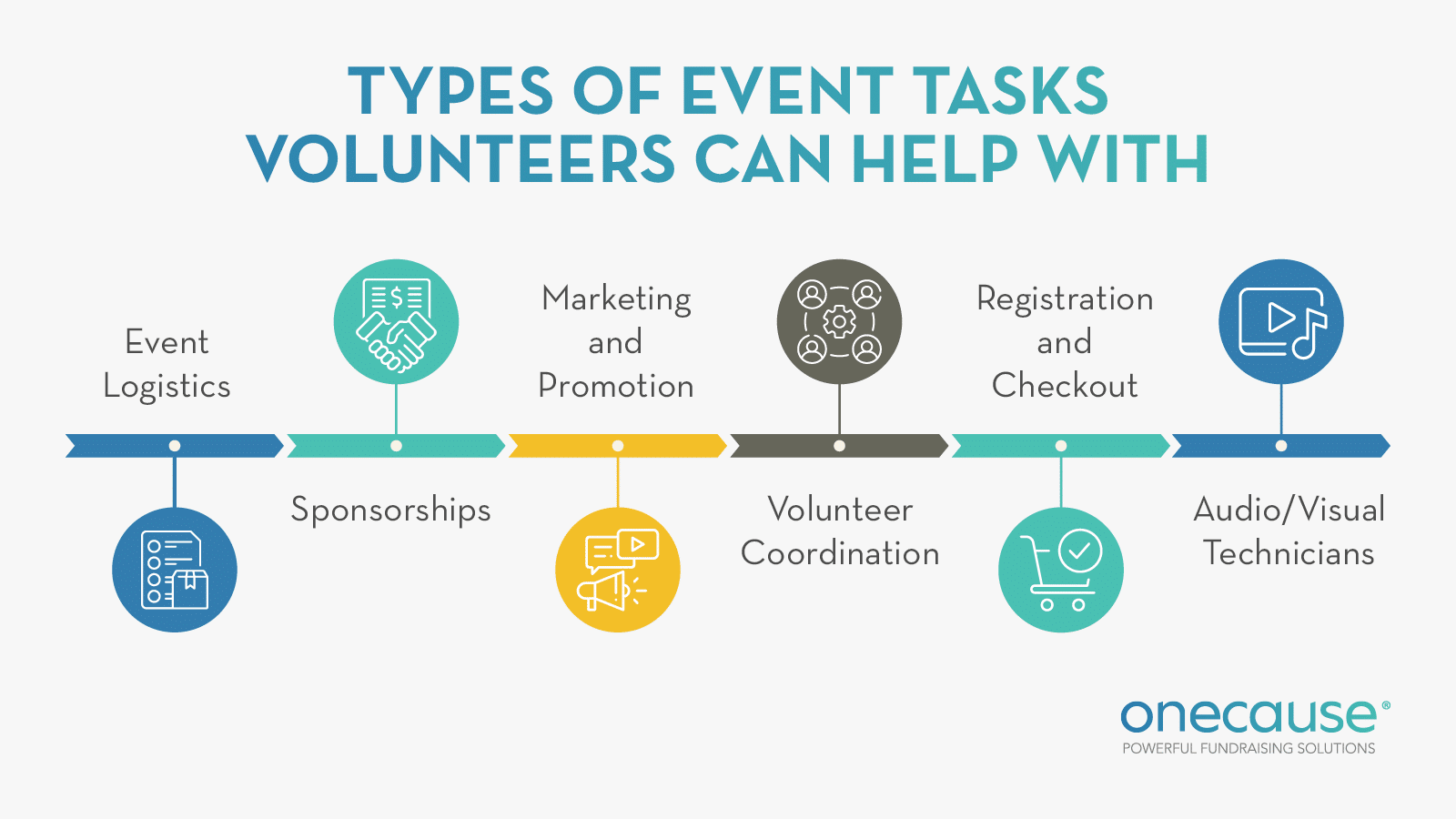
- Event logistics
- Sponsorship outreach
- Marketing and promotion
- Volunteer coordination
- Registration and checkout
- Audio/visual tech support
How to Manage Nonprofit Events
1. Define Your Event’s Purpose and Goals
Every great event starts with why. What do you want this event to achieve – donor stewardship, awareness, volunteer appreciation, fundraising, or all of the above? Defining your event’s purpose(s) ensures every decision you make drives meaningful results for your organization.
Based on the purpose of your event, set clear goals with SMART (Specific, Measurable, Achievable, Relevant, Time-bound) targets, so your team knows exactly what success looks like. For instance, a SMART goal could be: “Increase donor acquisition rates (Specific) by 15% (Measurable) over last year’s numbers (Achievable) to boost fundraising revenue (Relevant) by the end of the year (Time-bound).” Your event could support that SMART goal by focusing on engaging attendees from the community.
2. Select Your Event Type and Date
Event format and timing directly impact attendance and management complexity. The most effective events align with your target audience and your fundraising objectives.
Primarily, there are three forms your event could take:
- In-person: Remain highly popular with attendees, but carry higher logistical complexity.
- Virtual: Offer a broader reach and lower operational overhead, making it great for awareness campaigns or online giving days.
- Hybrid: Combine the best of both worlds, hosting some supporters in-person and inviting the rest to participate online.
Before locking in a date, think about any conflicting factors, such as the season, competing community events, or your organization’s capacity. Add the date to your event calendar and map deadlines for planning tasks and marketing objectives to keep your team on track.
3. Create a Detailed Budget
A detailed, realistic budget is essential for controlling unexpected costs and ensuring your event meets its fundraising goal. Your budget must account for every line item, including:
- Fixed costs, like venue rental, entertainment, permits, and liability insurance
- Variable costs, including catering per attendee, marketing spend, and event signage
- Revenue sources, such as ticket sales, auction proceeds, corporate sponsorships, or day-of donations
- A contingency fund, or a buffer for unexpected issues, like last-minute vendor changes or equipment failures
By meticulously tracking costs against projected revenue, you actively manage financial risk, ensuring your event contributes to your mission rather than draining from it.
4. Assemble Your Planning Team
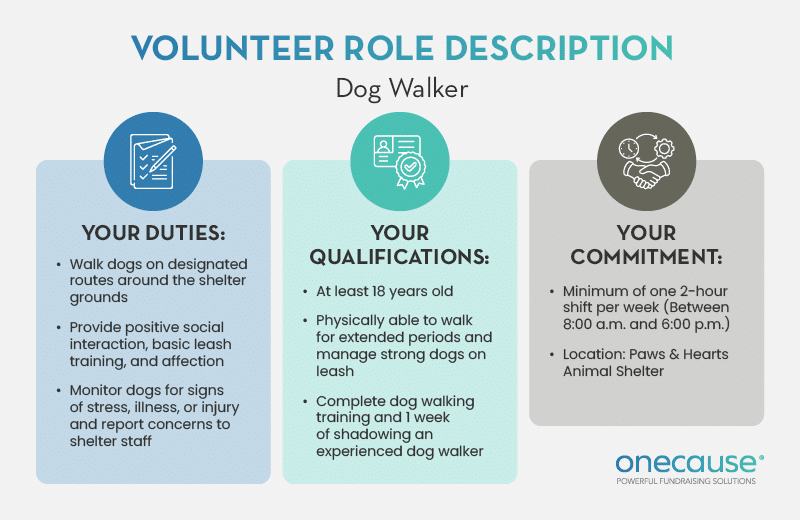
Every member of your event planning team should have a clear role so tasks stay organized and on track. This is especially important when working with volunteers, who may be new to your organization and may appreciate extra guidance on your processes and workflows.
A good volunteer role description should outline expectations around duties, qualifications, and time commitment. Here’s an example of what that might look like for an animal shelter volunteer:
5. Identify and Secure the Venue
Event professionals agree that choosing the right venue is one of the top three factors in creating a memorable experience for attendees. This step involves more than simply picking a space you like –it includes negotiating contracts that benefit your nonprofit and making sure the venue can support all the logistical needs of your event.
Before signing anything, confirm the space can comfortably accommodate your expected attendance and seating layout. Also, check for A/V and technical capabilities that will impact your event, such as WiFi strength, sound quality, and whether the venue can easily support presentations or livestreams.
Finally, clarify exactly what the rental fee includes to avoid hidden costs in your budget. For example, are you only renting the space, or will the venue’s staff handle cleaning after the event, too? Are there any applicable taxes or service fees not listed in the contract?
6. Develop Compelling Sponsorship Packages
Corporate sponsorships are an important source of revenue, but securing them requires creating attractive packages that clearly communicate the value for the business. A strong sponsorship pitch focuses less on what your nonprofit needs and more on what the sponsor will gain: exposure, brand fit, and direct benefits.
Offer tiered levels of support with commensurate benefits, making sure to:
- Connect with corporate sponsors: Detail the visibility the sponsor will gain through event signage, online microsites, and social media.
- Offer customized packages: Tailor benefits to match the sponsor’s marketing goals, whether that’s a speaking opportunity or a private VIP reception.
- Provide data insights: After the event, share metrics on brand exposure, such as attendance, social media reach, and website traffic.
By positioning sponsors as true partners in your mission, you’ll attract stronger support and lay the foundation for long-term corporate relationships.
7. Choose Your Fundraising Technology
Businesses host events, too, but the tools they rely on aren’t always built for the unique needs of a nonprofit. Your event needs features specific to online donations, tax-compliant receipts, and other fundraising essentials, which is why choosing a nonprofit-specific solution is so important.
To choose the right fundraising technology, here are a few steps to help guide your team:
- Research software. Ask for recommendations from similar organizations or conduct a Google search for the type of software you need. Check online reviews and client testimonials to get a sense of each platform’s strengths.
- Understand features. Look closely at the core functionality to make sure it provides everything you’ll need for your event.
- Book a demo. Schedule demos with your top choices to get a firsthand look at how the software works. Come prepared with questions for the software provider’s sales team to make sure you learn everything you can about the platform.
Above all, the software your team chooses should be user-friendly. It’s meant to simplify your event management, not complicate it, so choose a platform that feels intuitive and easy to learn.
8. Design a Marketing Plan
Your marketing plan is how you create excitement and boost attendance for your event. You should clearly outline this plan in your event calendar with specific dates for announcements, ticket sales, and final reminders.
A multi-channel approach will help you reach both your existing donor base and potential new supporters. Try using channels like:
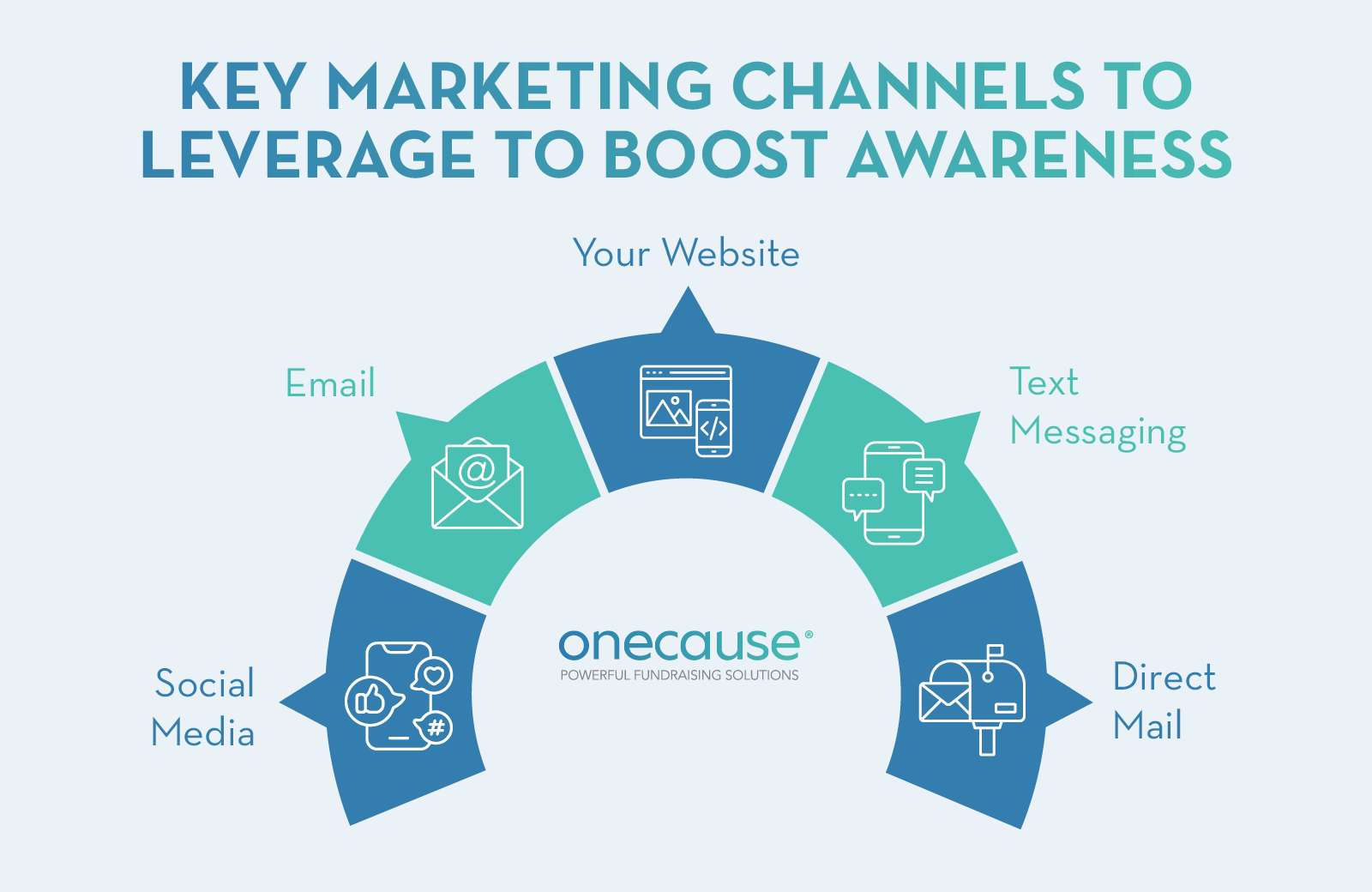
- Social media: Run a countdown campaign with behind-the-scenes glimpses of event preparations to build anticipation and excitement.
- Email: Send an exclusive early-bird ticket link to your most engaged supporters and past attendees as a loyalty benefit.
- Your website: Create a dedicated, mobile-friendly event landing page that serves as a hub for all information, including ticket sales, sponsorship tiers, and answers to frequently asked questions.
- Text messaging: Send a quick text message reminder the day before the event with check-in instructions and a link to the venue’s location.
- Direct mail: Mail formal, printed invitations for galas or higher-tier events to provide a sense of prestige and exclusivity.
9. Manage Ticket Sales and Registration
Registration is often the first physical touchpoint a guest has with your event, so it’s important to make the process as smooth as possible.
Offer custom ticket packages for different supporter levels, and make attendees’ arrival easy with contactless check-in. Also, prominently display your commitment to secure payment processing so donors can rest assured their data is safe when they buy their tickets.
When ticketing and registration run efficiently, your team can spend less time on logistics and more time engaging with guests and creating a welcoming experience.
10. Prepare for Day-of Logistics
Day-of logistics pull together every piece of your event: the venue, catering, A/V, volunteers, and all the planning you’ve done. This phase requires coordination, calm decision-making, and real-time data to confidently handle any unforeseen issues.
Here are a few key tasks for day-of nonprofit event preparation:
- Final vendor walkthrough: Confirm all deliveries, setup details, and schedules with catering, decorators, and A/V providers.
- Test technology: Double-check your devices’ internet connections, mobile bidding platforms, and presentation screens.
- Real-time analytics: Track last-minute ticket sales, donation activity, and bidding progress so you can adjust as needed.
- Review emergency plans: Revisit your backup plans for technical issues, weather events, or surprise attendance changes. Make sure volunteers know what to do, too!
11. Measure Event Performance
The work isn’t over when the last guest leaves; analyzing performance data is crucial for continuous improvement. Performance measurement helps you understand your event’s true return on investment (ROI).
The most helpful key performance indicators (KPIs) to track include:
- Attendee satisfaction: Although this won’t be a concrete number, you can use qualitative data, such as donor surveys and feedback, to gauge attendee satisfaction.
- Donor acquisition and retention rate: Measure the number of new donors the event attracted and the percentage of lapsed donors who returned.
- Cost-per-dollar raised: Calculate the ratio of total event expenses to the total gross revenue.
- Recurring donations: Consider tracking any recurring donations initiated by your event attendees during or after your event. The 2025 State of Nonprofit Auctions report found that 64% of auction attendees said they were likely to become monthly donors.
By effectively measuring these metrics, you generate valuable insights that directly inform the planning of your subsequent events.
12. Execute a Stewardship Strategy
The event itself is a high-touch cultivation moment, but your post-event follow-up determines the long-term impact on donor loyalty. Use the weeks and months following your event to deepen your connection with attendees, moving them up the donor pyramid toward major or recurring gifts.
The best stewardship plans are centered around gratitude. After all, your event wouldn’t be possible without attendees! Here are some appreciation strategies to focus on after the event wraps up:
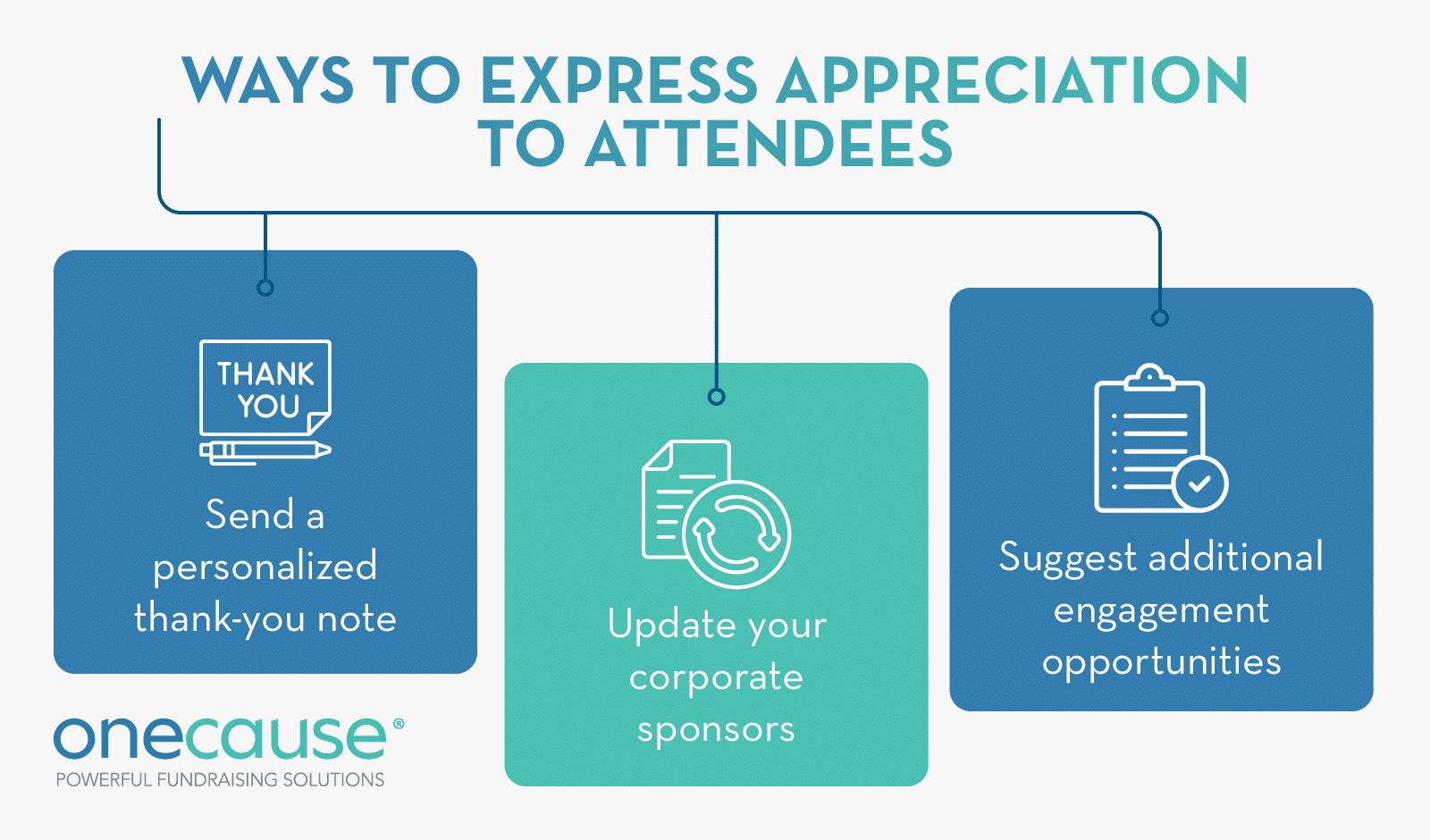
- Send a personalized thank-you note.
- Update your corporate sponsors.
- Suggest additional engagement opportunities.
5 Nonprofit Event Management Software Solutions to Consider
1. OneCause
OneCause is an all-in-one fundraising solution designed to help nonprofits and schools reach more and raise more. It’s engineered to handle the complex realities of events like charity auctions and galas, ensuring you spend less time on manual tasks and more time advancing your mission.
The platform offers a comprehensive suite of solutions that streamline every phase of event management, including:
- Auction tools: Leverage state-of-the-art auction functionality, including mobile bidding, automated bidding notifications, and item procurement tracking.
- Sponsor management: Track data about event sponsors to manage their contributions and deepen your engagement with them before and after the event.
- AI tools: Draft and publish engaging descriptions for auction items, raffles, and online campaigns within seconds.
- Online giving: Create mobile-friendly donation pages and event fundraising microsites branded to your organization to inspire audiences and drive conversions.
The OneCause Fundraising Platform provides what you need to manage your entire event, offering a streamlined system that removes complexity and maximizes fundraising results.
2. Winspire
Winspire specializes in helping nonprofits enhance their charity auctions by providing high-value, no-risk consignment travel and experience packages. They offer unique travel opportunities tailored to appeal to your donor base, featuring a diverse catalog of experiences that range from luxury getaways to culinary workshops.
The key benefit of partnering with Winspire is the no-upfront-cost model. You only pay for what sells above the nonprofit cost (reserve minimum), ensuring that every dollar above that cost goes directly to your cause.
3. Double the Donation
Double the Donation is the leading provider of matching gift and workplace giving software, focusing on helping nonprofits maximize revenue from corporate matching gifts. Its primary offering is a robust and accurate database of over 24,000 employers’ matching gift programs.
Double the Donation’s solution is essential for event management because it integrates directly into the donation and ticketing process. By making it easy for event attendees to double their contribution, Double the Donation helps unlock significant, often untapped, funding.
4. DonorSearch
DonorSearch is a prospect research tool that helps nonprofits identify high-impact donors already within their network and beyond. It specializes in providing detailed wealth screenings to assess a prospect’s financial capacity and their likelihood to give to a specific cause.
This tool is critical for event management planning and post-event stewardship: Integrating DonorSearch into your event strategy turns event attendees into a pipeline of qualified major gift prospects.
5. Salesforce
Salesforce is a constituent relationship management (CRM) system that provides a specialized solution for fundraising, program, and volunteer management workflows. For event management, it serves as a central hub for all supporter data, enabling highly personalized and integrated strategies.
While Salesforce itself is a CRM, its features can be extended through native or integrated event management apps. Salesforce’s strength lies in its scalability and ability to unify event data with the rest of the organization’s fundraising and marketing efforts.
Upgrade Your Nonprofit’s Event Management Approach Today!
Successful nonprofit event management is achievable when you combine a comprehensive, step-by-step strategy with cutting-edge technology. At OneCause, we do more than just equip you with the right software — we’re here to help you use our software to its greatest capacity, so you can raise more for your cause.
If you want to learn more about event management, check out the following resources:
- 5 Fundraising Gamification Strategies & How to Harness Them. Put the “fun” back in “fundraising” with these gamification strategies!
- Beyond Bids & Paddles: Fun Strategies to Boost Event Revenue. Watch this webinar recording to learn creative strategies for boosting revenue at your next event.
- How to Create a Standout Nonprofit Awareness Campaign. Hosting an event to kick off or conclude your awareness campaign? Use the tips in this guide to take your campaign to new heights.