Improving Donor Communications: 7 Strategies to Try
Donors are the heart of your nonprofit. From fundraising events to giving days, they keep everything moving to fuel your mission. But with today’s donors, staying connected takes more than just asking for their support.
The key to strong relationships is creating a conversation between your organization and your donors. When supporters feel personally tied to your cause and understand the impact of their gift, they’re more likely to stay involved.
To help you turn one-time donors into long-term supporters, we’re covering:
- What are Donor Communications?
- Key Parts of a Nonprofit Donor Communication Plan
- 7 Donor Communications Best Practices
What Are Donor Communications?
Donor communications are the various ways your nonprofit connects with supporters. This is the backbone of any lasting relationship. It’s the opportunity to express gratitude, share future goals, and update them on the impact of their donations.
There are many different types of donor communications, including:
- Marketing outreach: Share news, events, and campaign updates to keep supporters informed and encourage them to engage with your nonprofit.
- Fundraising appeals: Explain your organization’s needs and personally invite supporters to give.
- Stewardship emails: Strengthen connections by following up with impact reports and donor recognition after a supporter donates.
Thoughtful messages demonstrate that every gift matters and help donors feel like a true partner in your cause. And over time, consistent communication will encourage continued engagement and support.
Key Parts of a Nonprofit Donor Communication Plan
A donor communication plan serves as a roadmap for your messaging and helps guide you in defining what you want to achieve with each interaction. Setting clear goals for your plan will make sure every message counts!

Donor Data
The first step in creating a donor communication plan is to take the time to understand your audience. Reviewing your donor data gives a complete picture of who your supporters are and what motivates them – helping you personalize your messaging, timing, etc.
Key data to track and incorporate into your communications includes:
- Giving history
- Donation frequency
- Average gift size
- Program or campaign interests
Keeping track of this data will help you stay connected with donors in meaningful ways and ensure each supporter receives timely, relevant communication. Consider organizing your data by groups, such as age range, to best target your audience.
Personalization Strategies
Donors are looking to build relationships with nonprofits that genuinely value their contributions. Though it can be challenging to know every single donor on a close, personal level, here are a few steps to help your outreach feel more authentic:
- Recognize your donors’ preferences: Use donors’ preferred communication channels. Whether someone responds best to direct mail or email, meeting donors where they are shows that you respect their needs.
- Keep your communication relevant: Don’t overwhelm your donors! Leverage your data to understand what matters most to each group and share updates that align with their interests. Meaningful communication can lead to higher engagement.
- Connect with values and experiences: Tailor messaging to supporters’ passions and interests. Donating to a nonprofit is a personal experience, so highlight the part of your mission that will resonate most with them.
If you’re unsure what drove someone to support your nonprofit or how they prefer to hear from you, don’t be afraid to reach out and ask! When your communication is intentional, donors feel recognized, valued, and connected to your mission in a more meaningful way.
A Steady Communication Cadence
Your communication strategy should go beyond solicitations and thank-you notes. All donors want to feel like a valued part of your community, and an important part of intentionality is consistency.
Planning a year-round communication cadence that fits your team’s capacity will keep you on track and focused. Some organizations communicate monthly, others reach out every few weeks, and some maintain a quarterly schedule. Choosing a frequency that your team can maintain will be the most engaging.
Not sure what your communications should cover? Consider sharing:
- Upcoming events and fundraisers
- Volunteer opportunities
- Impact stories that highlight your mission
- Updates on programs and initiatives
- Results on campaigns
- Behind-the-scenes moments from staff or events
Regular touchpoints will create a steady schedule to engage your donors. Remember, a manageable rhythm is far more effective than a single message followed by long stretches of silence.
Cross-Channel Messaging and Content
Multi-channel marketing is all about reaching donors wherever they are and maintaining consistency. Reusable branded content makes this easier, letting your team communicate across platforms without having to reinvent the wheel each time.
Create ready-to-use assets like thank-you emails, newsletters, social media post templates, and follow-up copy to save time and keep your messaging cohesive across channels.
Then, share these materials across key marketing channels, including:
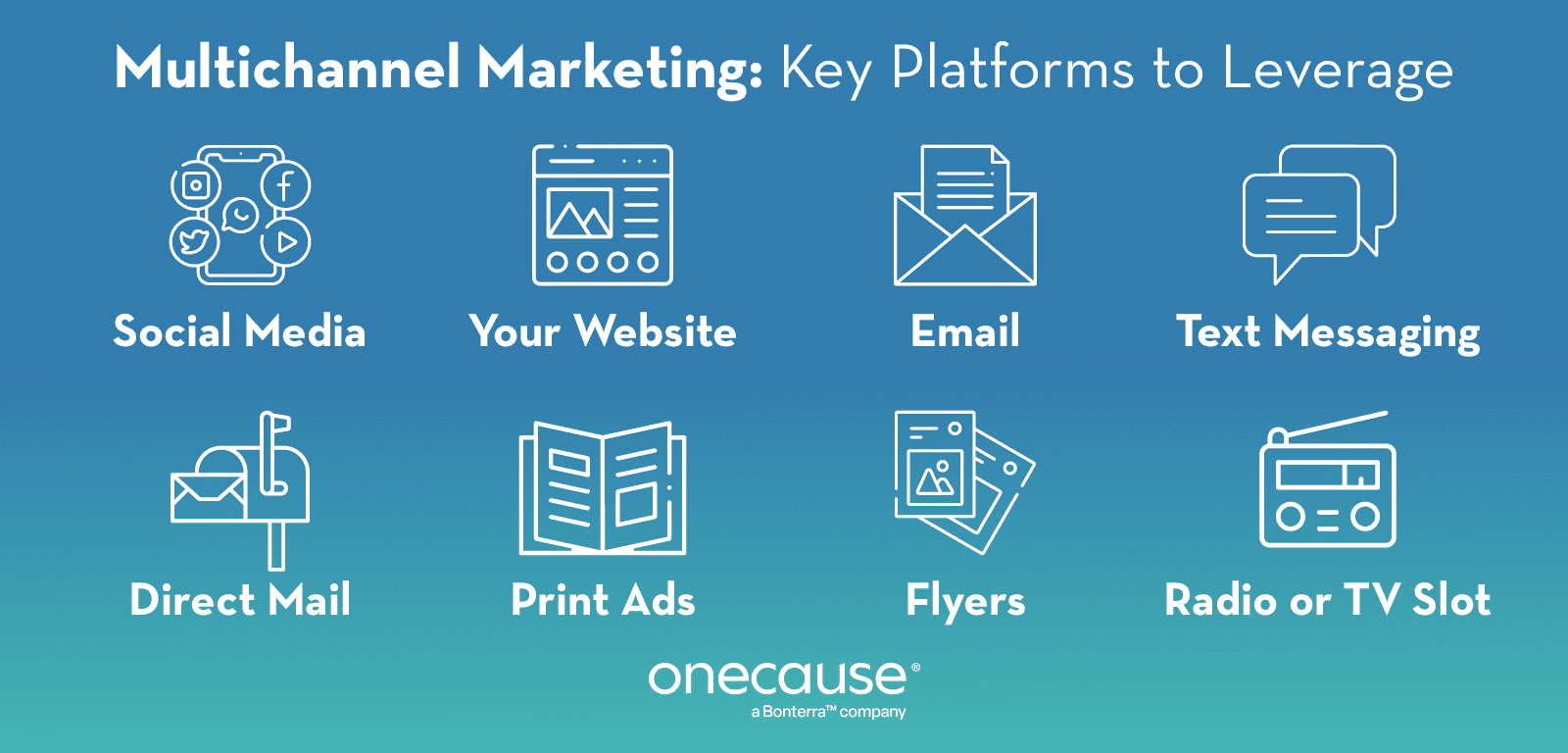
- Social media: Templates for posts and stories make it easy to share timely updates.
- Your website: Consistent branding reinforces trust and recognition of your mission.
- Email: Pre-determined newsletter layouts and donation follow-up templates simplify the process.
- Text messaging: Short, branded SMS messages will help you send quick reminders when needed.
- Direct mail: Formatted letters or postcards create a clean look that stands out to donors.
- Print ads: A polished visual style strengthens brand recognition and helps connect your message.
- Flyers: Reusable designs will save you time when promoting updates and events.
- Radio or TV slots: Simple, pre-drafted scripts will help all your team members clearly communicate your mission.
With reusable content and consistent branding, you’ll share your mission with passion and confidence to create a seamless supporter experience that strengthens connections every time they come across your mission.
Donor Appreciation and Stewardship
Donor cultivation lays the groundwork – stewardship is the next step. The good news is that if you already have a consistent donor communications cadence, then you’re practicing stewardship!
Ongoing updates, impact stories, and regular check-ins show donors that they continue to matter long after they’ve donated. To express gratitude, you can:
- Write personalized thank-you notes
- Invite them to a lunch outing
- Put together a thoughtful gift
- Send an invitation to get more involved with specific programs
- Initiate a conversation about joining a board or committee
Stewardship becomes much easier when you work from a communication calendar. A yearly or quarterly schedule will help your team plan cultivation and solicitation messages well in advance. Plus, staying on schedule with your communications helps keep donors engaged because they’ll know when to expect updates from you.
At the same time, building flexibility in your schedule is just as important. Real-time updates and wins often resonate the most, even if they’re not always planned. A balance of structure and spontaneity creates a communication rhythm that feels organized yet authentic.
7 Donor Communication Best Practices
Once you’ve created a strong foundation for your content and stewardship plan, your team can begin incorporating proven strategies to make your donor communications even more effective.
1. Segment your lists and tailor communication strategies.
Not every donor responds to the same messages or approaches. Similar to how you speak differently to individual friends and family members, your communications should reflect each group’s interests and giving habits. The easiest way to do so is through segmentation.
Donor segmentation is the practice of splitting your donor list into a series of smaller, more specialized lists based on different attributes. Once you’ve organized your groups, tailor your communication to their motivations.
Here are a few examples of matching your messaging to different donor motivations:
- Volunteers: Highlight the impact of their time and the value of their impact. Share upcoming opportunities and stories from programs where volunteers are needed.
- Major donors: Emphasize strategic, long-term goals by including behind-the-scenes updates and progress reports on how their gifts are making a difference.
- First-time donors: Welcome them warmly and share your mission and values. Add easy ways to get involved again and guidance on how to stay connected.
- Frequent event attendees: Focus on upcoming events, whether it be volunteering or fundraisers. Share photos of the latest events and highlight the value of their participation.
Making donors feel seen will require getting to know your audience to best tailor communications. In time, speaking to each group’s interests will make your messages feel more personal and encourage greater engagement.
2. Make your donor communications accessible.
Accessibility in donor communications goes beyond choosing a legible font or writing clearly – it’s about inclusivity and making sure every supporter can take part.
To deliver the best experience, prioritize accessibility in your:
- Font choice and size
- Word choice and clarity
- Color contrast for readability
- Descriptive alt text for images
- Clear calls-to-action
Convert more donors by taking these best practices to your website, and most importantly, to your donation page. OneCause donation forms make accessibility easier by combining clean, user-friendly designs with these best practices.
Offering supporters a donation form that’s easy to read and mobile-optimized allows them to engage anywhere, on any device.
3. Plan for ongoing communications.
Consistency is key for donor communication! Keeping donors informed about how their generosity fuels your mission is essential for ongoing engagement, but it shouldn’t be one-sided. Prioritizing donor feedback is another powerful way to keep supporters involved and connected to your work.
Make it easy for donors to share their thoughts by providing clear points of contact, such as:
- A staff member’s name and phone number
- An email address dedicated to questions or support
- A short feedback form that they can quickly fill out
Inviting donor input benefits your organization in two important ways. First, it shows supporters that their voices matter and that your nonprofit genuinely values their experience. Second, their insights can help you refine your approach – from event planning to volunteer opportunities – ensuring your strategies best reflect your community’s needs and ultimately strengthen your fundraising results.
4. Connect with donors’ values and experiences.
Donating to a nonprofit is a very personal experience. People give to the causes that resonate most deeply with their lives, values, and experiences. When you understand what part of your mission inspired someone to get involved, you can tailor your donor communications to reflect their interests and keep them meaningfully engaged.
For example, are they passionate about charities that support children? Make sure that they’re kept up to date on everything that your nonprofit is doing that benefits the little ones in your community!
Some questions for better understanding and connecting with donors are:
- What does our mission mean to you?
- What are the most important results you expect from our organization?
- Why does this cause matter to you, and why now in particular?
- How would you describe your personal mission?
These questions are very personal and might require some time getting to know the donor first, but their answers will help you build a stronger, more fulfilling relationship in the long run.
5. Emphasize impact.
Keep your donors engaged throughout the year with updates of your nonprofit’s vision and goals. Your donors want to see what little parts of the big picture your nonprofit is achieving.
Emphasize impact in your donor communications by:
- Sharing short stories of beneficiaries or community members
- Including fundraising results or milestone goals
- Adding photos of your mission at work
- Explaining how donor gifts are currently being used
When your messaging tells the story of how donor generosity makes a real impact, you’re more likely to capture donor attention. Visuals will help show what you’re doing, but incorporate powerful language to emphasize that it’s donors who make it all possible.
6. Use clear, empowering calls to action.
Effective donor communication means knowing when to ask, how to ask, and how to make every supporter feel like an essential partner in your cause. Solicitation messages naturally spike at key giving moments, including:
- Giving Tuesday
- Year-end campaigns
- Capital campaigns
- Internal milestones, like the launch of a program
- The end of a fundraising campaign
During these moments, your content should be simple and direct around the most important call to action (CTA). A clear ask feels far more approachable when it stands out from the rest of your message. By using straightforward CTAs, like “Give now” or “Donate”, your supporters will know exactly what to do next.
For instance, take a look at this Giving Tuesday example:
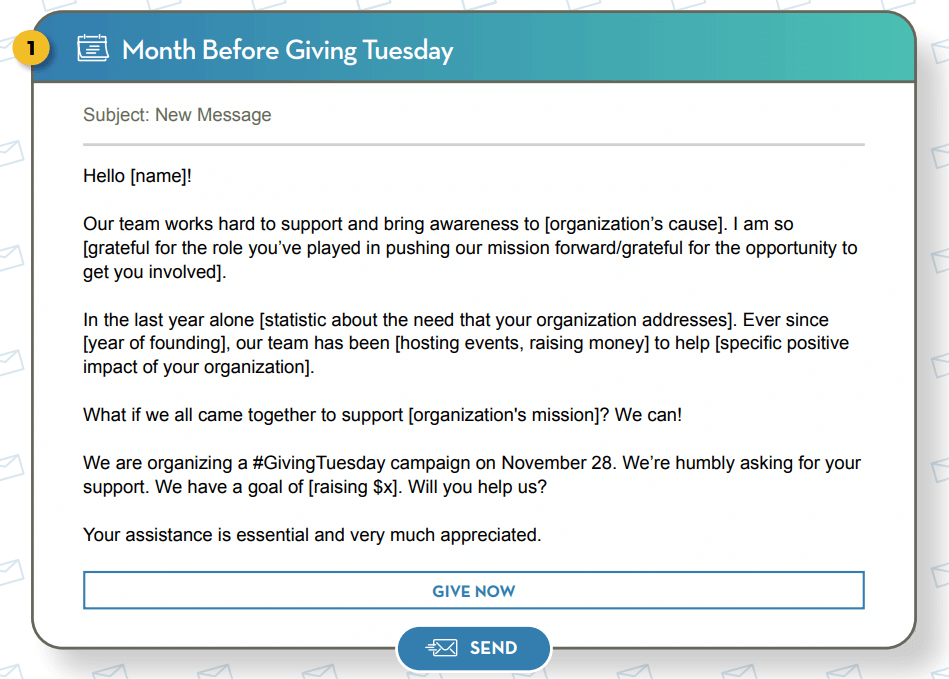
This example includes a CTA button at the end of the email and a hyperlink to the nonprofit’s donation page. These strategies will make your donation forms and calls to action much more accessible.
7. Cultivate a community built on gratitude.
Your community is one of the reasons for your nonprofit’s success, so make sure to take the time to say thank you. Consider showing your appreciation through heartfelt gestures such as:
- Handwritten thank-you notes to your donors in the mail
- Commemorative plaque of your major donors
- Donor recognition at events and fundraisers
- Donor wall of supporters on your event site
Building a culture of gratitude around everything that you do is a great way to increase engagement with your donors, volunteers, and staff members. It makes your nonprofit more human, more engaging, and inspires more dedication to your mission.
Upgrading Your Nonprofit’s Donor Communications
Effective donor communication is all about consistency and genuine connection. When your messages are accessible and impact-driven, the experience becomes more engaging for donors.
OneCause can help you put these strategies into action with intuitive fundraising tools and flexible solutions that make giving easy. With the right communication cadence and top technology, your nonprofit can strengthen its relationships and keep donors at the heart of your mission.
Looking for more insight? More fundraising resources are just a click away:
About the Author

Sarah Sebastian
Director, Corporate Communications
Sarah Sebastian is the Director of Corporate Communications at OneCause, a fundraising software company that helps nonprofits raise more and reach more donors. She leads the company’s research initiatives and co-chairs the programming committee for the annual Raise fundraising conference. A former teacher and literature major turned nonprofit tech professional, Sarah brings a deep love of language and learning to her work. With more than a decade of experience in nonprofit technology, she specializes in...