
Corporate Sponsorships for Nonprofits: 9 Opportunities
Today’s consumers expect the brands they support to stand for something, and companies are responding by seeking authentic ways to engage in their communities and give back. For nonprofits, this presents a major opportunity for deeper partnerships that fuel their mission and purpose.
But securing corporate sponsorships can feel overwhelming without a clear roadmap. To make the process easier, we’re covering:
- What is a Nonprofit Corporate Sponsorship?
- Main Types of Corporate Sponsorships for Nonprofits
- How to Get Corporate Sponsorships
- 9 Example Corporate Sponsorship Opportunities
- Nonprofit Corporate Sponsorship FAQs
This guide will walk through key elements of corporate sponsorships, practical ways to elevate your outreach, and examples of sponsorship opportunities.
What is a Nonprofit Corporate Sponsorship?
Corporate sponsorships are partnerships in which a business supports a nonprofit through financial or in-kind contributions in exchange for visibility or mission alignment.
When you think of corporate sponsorships, a company sponsoring a 5K or a retailer inviting shoppers to round up at checkout for a donation may come to mind. But in reality, sponsorships today are far more varied and creative!
These types of partnerships grant nonprofits a valuable revenue stream for fundraising events and campaigns without adding extra costs. This makes corporate sponsorships a true win-win, supporting the organization’s cause and the company’s goals.
Main Types of Corporate Sponsorships for Nonprofits
Nonprofits can partner with companies in different ways, with each type of sponsorship providing unique benefits. However, corporate sponsorships generally fall into two main categories:
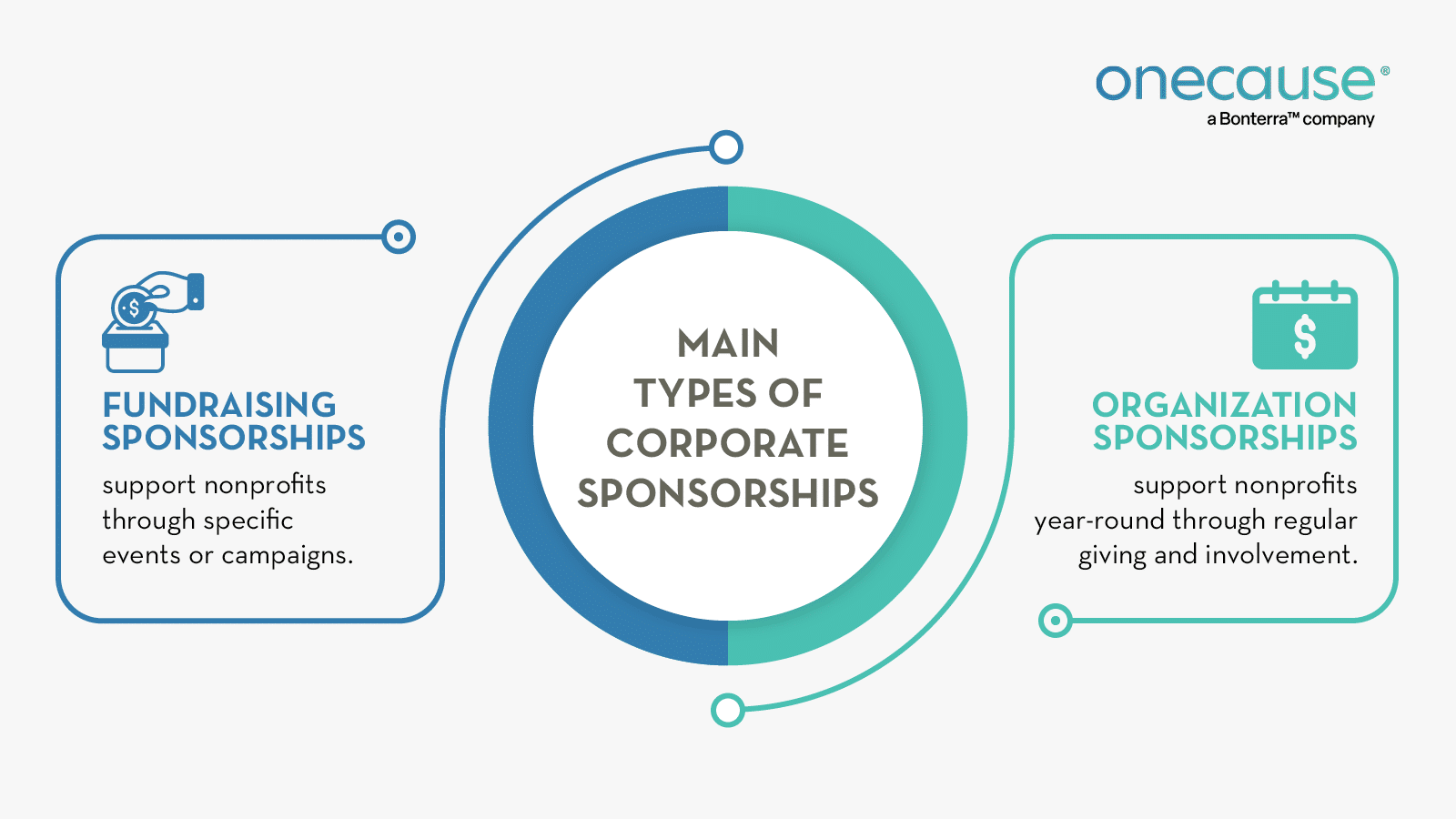
- Fundraising sponsorships offer support through specific events or campaigns. Companies can donate money, volunteers, auction items, food and beverages, and underwrite expenses.
- Organization sponsorships provide year-round support through regular giving and involvement. This includes corporate social responsibility (CSR) campaigns, program sponsorships, in-kind gifts, and pro bono support.
Nonprofits typically leverage sponsorships to launch initiatives and expand programs that strengthen their community impact. Sponsorship funding most often helps organizations enhance events and boost production quality to attract more attendees and drive revenue growth.
With sponsorships comes access to more resources, like marketing support to reach new audiences by using the company’s brand recognition. Maximizing these relationships grants your team more time and capacity to do more for your cause.
How to Get Corporate Sponsorships
Finding corporate sponsors can feel overwhelming for nonprofits, especially when resources are limited, and the competition for corporate support may feel high. After all, many companies receive countless requests from organizations seeking financial support or other involvement.
So how can your nonprofit stand out from the crowd? Here’s how to get started:
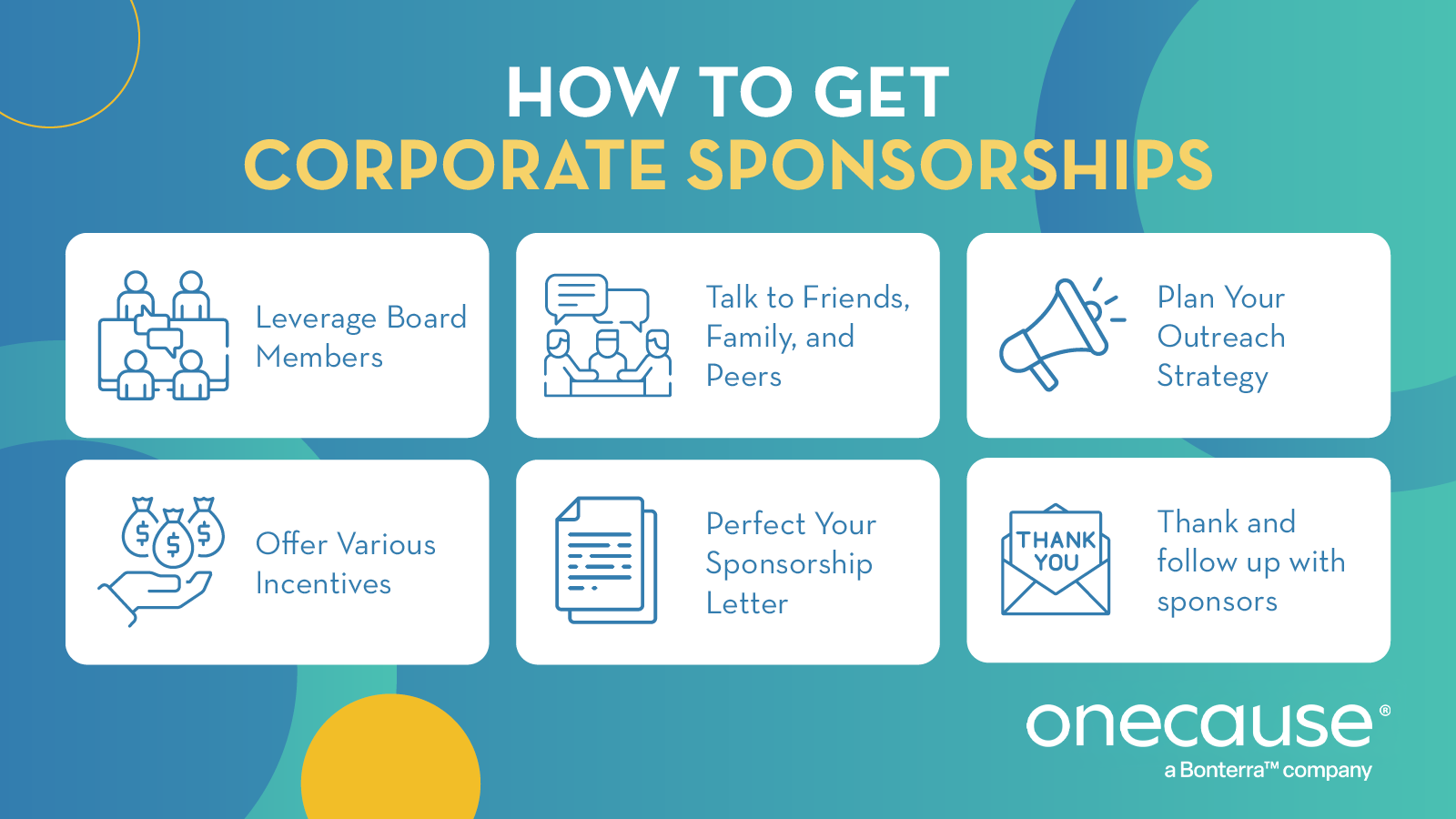
1. Leverage your board members
Your nonprofit’s board members are more than advisors – they’re a gateway to powerful connections and potential sponsorships. Many are likely well-respected community members, making your board an excellent starting point when finding corporate sponsors.
Begin mapping your board’s networks. Identify where members work, who they know, and any potential links to companies that might support your mission. Outlining your board’s network offers a simple but powerful way to create a targeted list of potential partners.
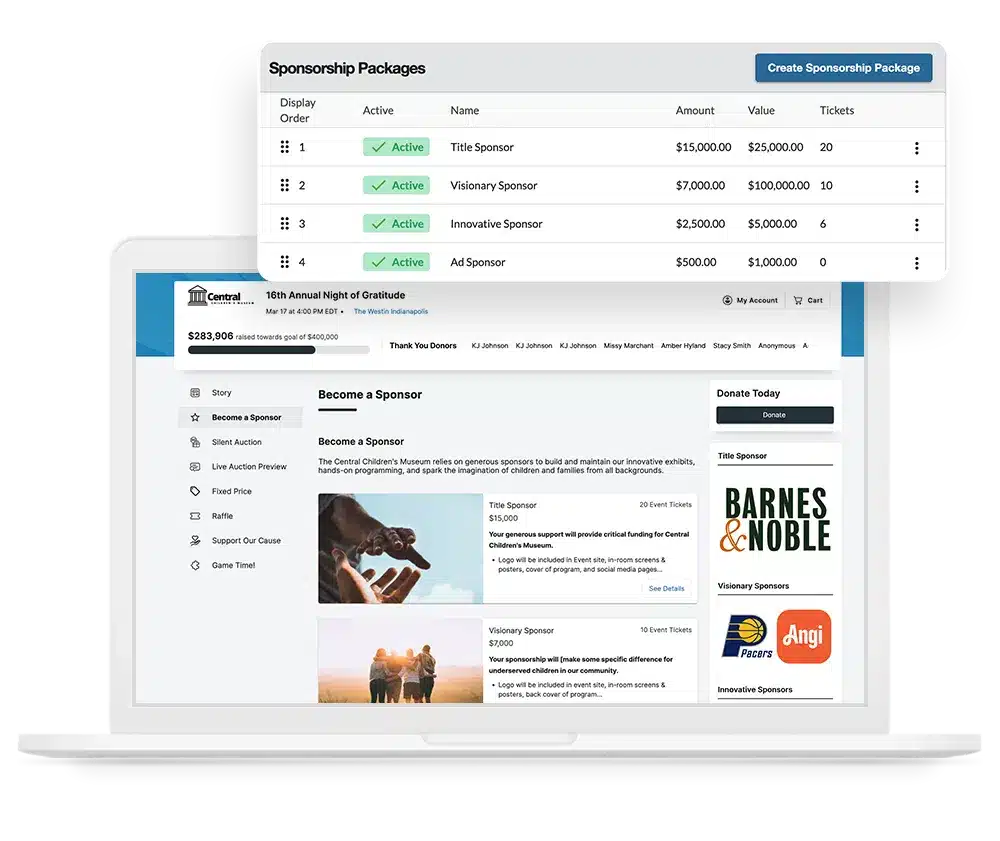
After you have a list of board members’ contacts, create sponsorship packages and packets that include key details about your nonprofit, what corporations can help fund, and answers to potential questions about your work. Board members can use these packets to make introductions or even secure donations directly with their contacts.
2. Talk to friends, family, and peers
Don’t underestimate the power of personal connections! Social proof is a major motivator in today’s charitable landscape – just look at the success of peer-to-peer fundraising. People and businesses are more likely to give when they know someone involved in supporting a cause.
Maybe your friend’s uncle’s company is looking for a charity to sponsor, or your cousin’s wife runs a start-up exploring corporate partnerships. Use LinkedIn, Instagram, and other social media platforms to tap into your network and gauge interest.
Also, talk to top volunteers, donors, and staff about who they know or any possible connections. Casting a wide net through personal relationships can be a powerful way to foster corporate sponsorships and help your nonprofit grow.
3. Plan your outreach strategy
Take the time to strategically plan your approach before reaching out to potential sponsors.
For instance, you might compile a list of local or regional businesses that have advertised or established sponsorship programs. Then, cross-reference that list with your personal and professional associations to identify any easy entry points and see where your network is already connected in the community. Businesses that fall into both categories are your ideal first targets because they’re more likely to respond positively to your outreach.
When you reach out, whether via email, phone, or personal introduction, focus on creating value. Lead with your mission, create an emotional tie, and emphasize the value a corporation stands to gain by partnering with your nonprofit.
4. Offer various incentives
While most corporate sponsors have their own reasons for partnering with a nonprofit, oftentimes a little extra incentive helps them take the first step. Ask yourself: What unique benefits can you offer sponsors that will truly catch their attention?
One of the most effective approaches is promotion, but to make it more appealing, consider the following:
- Include your sponsors’ logos on your fundraising page. If you have tiered sponsorships, feature different-sized sponsor logos for the different tiers.
- Feature your sponsors’ branding on all event materials, including your ticketed event page. This digital visibility can be a massive value-add to attract sponsors.
- Create a dedicated sponsor page on your website. Showcase the logos of your most generous corporate partners. Include CTAs encouraging other companies to become involved.
Involvement-based incentives can also add value. For example, give sponsors free tickets to a fundraising event or organize a VIP reception where sponsors, donors, and board members can network. These opportunities convey your appreciation and help supporters expand their own networks.
5. Perfect your sponsorship letter
Start with a sponsorship letter template that highlights the alignment between your organization, the company’s brand, and the impact their support can make. This foundation allows you to outline the tangible benefits of the partnership and propose a structured plan for a mutually beneficial arrangement.
From there, add personalized details tailored to each company. Highlight shared values, past engagement, or specific ways their contribution would make a difference. This keeps your outreach scalable while still creating the meaningful, customized connection that helps secure corporate sponsorships.

6. Thank and follow up with sponsors
Thanking your sponsors is equally important as securing them. Acknowledging support in both public and private ways helps build lasting relationships, from featuring logos on event pages and social media shoutouts to personalized thank-you notes and phone calls.
Following up on the impact of their support is easy when the OneCause Fundraising Platform allows you to track sponsorships, recognize them publicly, and generate reports to show measurable results. Leveraging these tools ensures your sponsors feel valued and connected to the difference they’re making.
9 Example Corporate Sponsorship Opportunities
Corporate sponsorships can take several forms, but many companies are eager to partner with nonprofits to give back to their communities and engage their teams. Here are nine examples of companies that regularly extend support to nonprofits.
1. Google
Through Google for Nonprofits, eligible charitable organizations are granted access to programs like Google Workspace and Ad Grants, which provide up to $10,000 per month in free Google Search ad credits. Nonprofits can apply online to request these resources and boost their outreach and program organization.
2. Microsoft
Microsoft empowers nonprofits with solutions that are affordable and accessible. Organizations can request discounted access to products such as Azure to run cloud infrastructure, Microsoft 365 for productivity tools, and Dynamic 365 for program management. The registration is simple: submit your nonprofit’s status for validation and activate the offers available!
3. Wells Fargo
By choosing to invest in pathways to economic advancement, Wells Fargo offers sponsorships and a grant program for nonprofits focused on financial health, housing affordability, and small business growth. For grants, organizations are recommended to submit their proposals at least 90 days before the sponsorship start date.
4. Ernst & Young (EY)
Ernst & Young supports nonprofits through a powerful mix of volunteerism, skill-based partnership, and event support through its EY Ripples program. Through the program, employees dedicate time to sustainable development projects, offering pro bono consulting and mentorship. Learn more about how your nonprofit may benefit from their corporate responsibility.
5. Walmart
Walmart supports communities through local grants and in-kind donations. Its Spark Good Local Grants range from $250 to $5,000 to benefit different organizations, including animal shelters, elder services, and community clean-up projects. Their Storefront Reservation tool also lets local organizations request space outside stores to fundraise or drive awareness. Explore their round-up, registry, and other opportunities through their Spark Good program.
6. Target
Target supports charitable organizations through multiple avenues, including grant funding, gift card donations, and engagement with local communities. During the holidays, they partner with local nonprofits to fulfill their wish lists through their annual Great Giftogether. Nonprofits can tap into these opportunities by applying online or connecting with local stores directly.
7. ALDI
Nonprofits can benefit from ALDI’s Community Gift Card Program to cover food costs for after-school and out-of-school programs. Local nonprofit organizations that positively impact children’s health and wellness through education, arts, athletics, or addressing food insecurity are encouraged to apply.
8. Whole Foods Market
The Whole Foods Market Store Giving program provides financial support for nonprofit organizations with missions around environmental stewardship or other closely related needs. In-kind donations are also provided throughout the year and can be requested by directly contacting local Whole Foods Market locations.
9. Chobani
Chobani backs nonprofits through its Community Impact Fund and product-donation programs in Idaho and New York. Organizations working on food security, health, and infrastructure projects that benefit local communities can benefit from Chobani’s support. It’s recommended to submit product donation requests at least 30-45 days before your event.
Nonprofit Corporate Sponsorship FAQs
Check out this quick FAQ to help you better understand the power of corporate sponsorships.
Can nonprofits have corporate sponsors?
Yes! Nonprofits can absolutely have corporate sponsors. Companies often partner with organizations to give back to their communities and help shine a light on a cause that aligns with their values.
What are the benefits of corporate sponsorships for nonprofits?
Corporate sponsorships empower nonprofits through resources, financial support, in-kind donations, and increased visibility for their programs and fundraisers. Sponsors can also benefit from brand recognition and positive PR by demonstrating their community commitment.
For businesses, the main benefits of corporate sponsorships include:
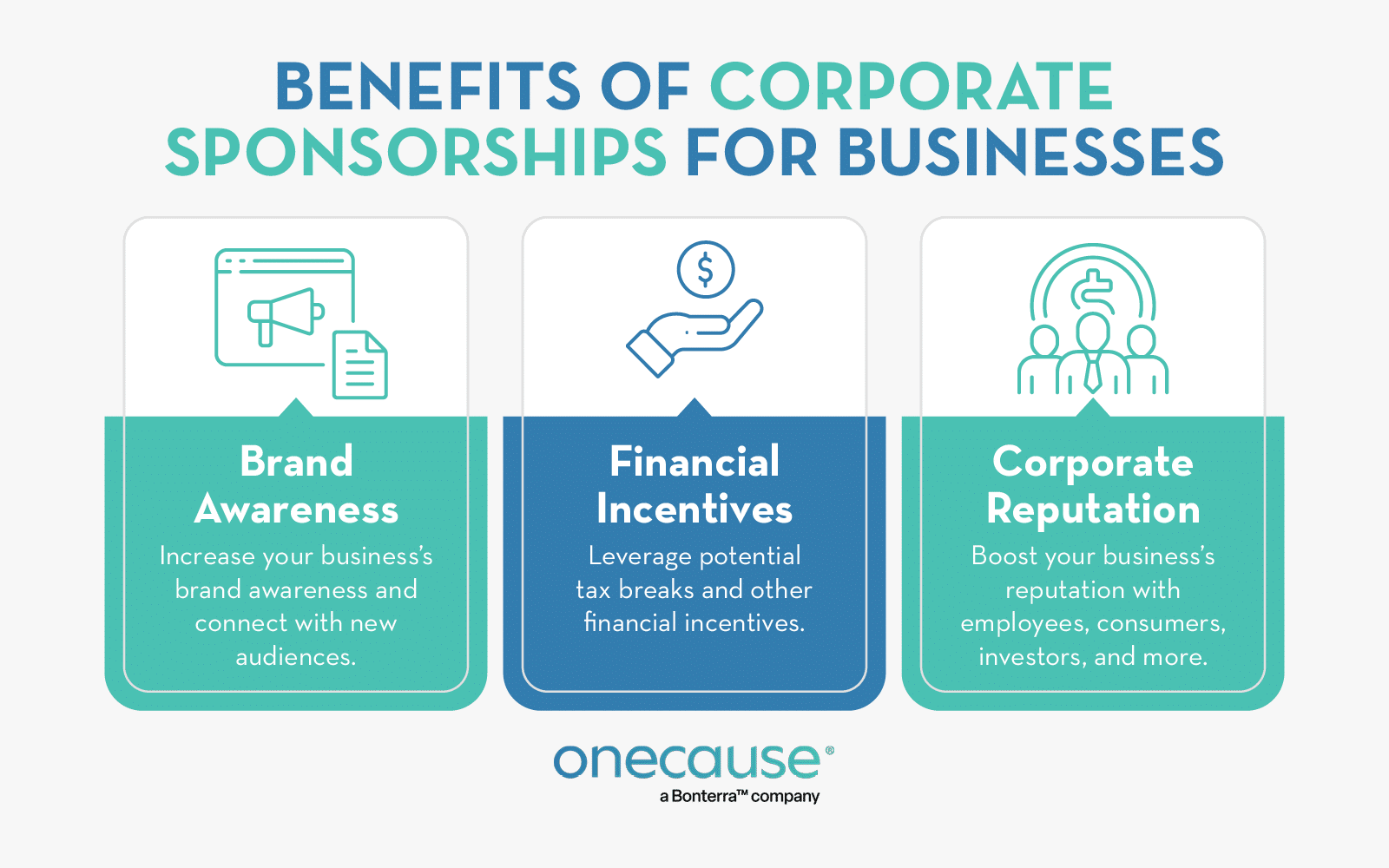
- Brand awareness: Increase your business’s brand awareness and connect with new audiences, including supporters who value socially responsible companies.
- Financial incentives: Leverage potential tax breaks and sponsorship expense write-offs to help offset costs while supporting community impact.
- Corporate reputation: Boost your company’s reputation among employees, consumers, and investors.
Corporate sponsorships let businesses align with philanthropic causes, strengthening brand perceptions, and engaging their audience with social good.
How do I reach out to corporate sponsors?
Harness the power of your network to identify companies that align with your nonprofit’s mission. Reach out to potential corporate sponsors strategically, offering clear incentives such as logo placement, event tickets, and public recognition. Use sponsorship letter templates to kickstart the conversations and follow up with gratitude to build relationships.
Securing Corporate Sponsorships for Nonprofits
Securing corporate sponsorships may take time and research, but the effort pays off in funding and resources. The right companies, presenting compelling proposals and packages, along with fundraising software to manage sponsorships, can turn opportunities into lasting impact.
Need more insight? Check out these additional resources to make the most of your efforts to push your mission forward:
About the Author

Karrie Wozniak
Chief Marketing Officer
Karrie Wozniak is the CMO at OneCause, where she brings 25 years of leadership experience in marketing, brand strategy, and sales, along with a deep passion for the nonprofit sector. As one of the company’s early executives, she has played a key role in building OneCause from the ground up, helping shape its growth, brand, customer experience, and overall impact. She also created the Raise Conference; a signature event designed to inspire and empower nonprofit...