
Top 5 Priorities Nonprofits Must Tackle in 2026
2025 was a pivotal year in fundraising.
As nonprofits adapted to changing donor behaviors and embraced innovative approaches, organizations showed resilience, creativity, and a commitment to deepening connections with supporters – always focused on pushing their missions forward.
So, what does 2026 hold? There’s a mix of excitement and potential challenges. Nonprofits are navigating evolving donor expectations, shifts in revenue streams, and the need to rethink engagement and retention strategies.
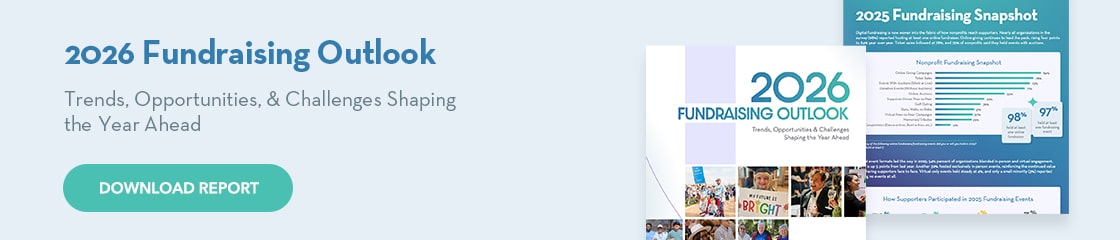
To understand how organizations are adapting, the 2026 Fundraising Outlook Report draws insights from 1,273 nonprofit professionals from across the sector.
Check out what nonprofits stated as their top priorities for the year:
Donor Fatigue
Donor fatigue topped the list of fundraising challenges in 2025, with 87% of organizations calling it at least somewhat of a problem. It’s a challenge for nonprofits of all sizes, and it’s not going away.
Before addressing donor fatigue, you first have to be able to identify it. It might look like a consistent decline in donation frequency or smaller gift amounts. It might also appear as reduced engagement, whether it be through emails, calls, or other donor communications.
A few potential reasons for these patterns:
- Lack of follow-up: Donors want to feel valued and failing to recognize their contributions or engagement can strain the relationship.
- Consistently negative messaging: Constantly highlighting heartbreaking stories without celebrating progress can lead to emotional burnout.
- Personal circumstances: Sometimes fatigue is unrelated to your organization — life changes, or finances can impact giving.
So, how do you address donor fatigue in 2026?
Share the Impact
Don’t stop engaging your supporters after they’ve pressed the ‘Donate’ button. Share how their support is changing the world! Break it down into specific dollar amounts when possible.
- Your $50 donation sent Samantha to summer camp.
- Your $75 fed a family of 4 for a week.
- Your $150 provided food for the entire animal shelter for one day.
Include pictures when you can to further personalize and humanize your messaging.
Host Events Just for Fun
Don’t limit interactions to fundraising appeals. Create experiences that celebrate and connect with your donors.
- Host a party with food, drinks, and mingling.
- Incorporate fun activities, such as a raffle, to encourage further participation.
- Create experiences or programming to let them know how appreciated they are.
Volunteer and donor appreciation events are a great way to combat donor fatigue.
Give Recognition Early and Often
Prompt and meaningful donor recognition can help lay the foundation for a stronger connection. Here are our favorite ways to say thanks:
- Donor wall
- Handwritten thank you letter
- Social media shoutout
- Appreciation video
- Celebration event
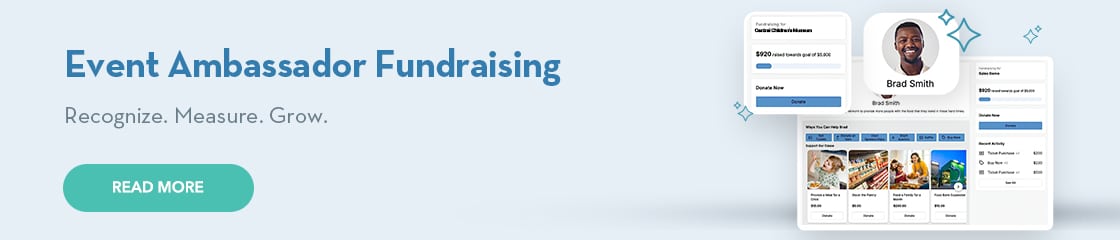
Try incorporating donor recognition into your campaigns with event ambassador fundraising. Track, credit, and recognize every ambassador who contributes to revenue using fundraising software.
Donor Engagement
Donor engagement remains a key challenge for nonprofits, but it’s also one of the most rewarding opportunities. This is the year to focus on deepening donor relationships and getting them to take their support to the next level.
Think about the foundation you’ve built with each donor and decide the next step to strengthen their connection to your cause.
Here are a few ways to strengthen your relationship with different supporters:
- Casual donors: Encourage them to support a specific initiative that aligns with their passions.
- Loyal supporters: Invite them to volunteer, participate in regular mission-oriented activities, or join planning committees.
- Influential donors: Individuals with strong community ties or large networks can serve as advocates for your cause.
- Highly involved individuals: Offer opportunities to contribute their skills as a board member or committee leader.
The goal is to create emotional connections beyond the act of giving. Let donors experience your mission and watch your mission grow! Regardless of their involvement, make the time to engage donors. Here are a few ideas on how:
- Take donors on a tour of your space or facility.
- Share a video of how and where their support made a difference.
- Introduce them to someone who has been personally impacted by their donations.
- Unveil plans or roadmaps about the future – how you plan to grow your impact.
Make your approach personal and authentic. The more donors understand the change they’re making, the more engaged they will feel with your mission throughout the year.
Recurring Giving
As nonprofits look ahead, 86% say recurring giving remains a priority for 2026. Recurring gifts offer predictable revenue and help build those lasting donor relationships.
The good news is that donors are open to it. In the 2025 State of Nonprofit Auctions Report, 64% of auction attendees said they were likely to become recurring donors. That’s a huge signal that events aren’t just revenue moments; they have the potential to spark sustained giving.
An easy way to tackle this opportunity is by optimizing your donors’ giving experience. Focus on making the donation process as seamless as possible for your supporters. Offer a variety of payment options, including digital wallet (Apple Pay, Google Pay), ACH/bank account donations, and DAF pay options, to meet the preferences of today’s donors.
Equally important as having a recurring giving strategy is having the right technology to inspire ongoing generosity. The OneCause Fundraising Platform offers donation forms that are built to capture and encourage recurring gifts.
You can even create different recurring giving levels to:
- Provide custom giving amounts based on donors’ desired giving levels.
- Customize whether the donation is annual, monthly, or weekly.
The initial gift is contributed to the specific event’s proceeds, and the remaining recurring gifts are allocated and visible at an organizational level – making it simple for your finance team to track monthly gifts.
Sponsors (Acquisition, Management, etc.)
As nonprofits look to fill funding gaps and expand their support, sponsorships are becoming one of the top priorities. Many teams are finding ways to acquire new sponsors and learning how to best manage them to provide a seamless experience.
If you want to acquire more sponsors, consider the following:
- Target businesses and other organizations that align with your mission’s values and audience to complement your efforts.
- Leverage existing connections from your board members, volunteers, staff, or loyal donors for introductions to potential sponsors.
- Create sponsorship packages that outline tiers with different benefits for supporting your cause.
- Draft compelling sponsorship letters to capture attention and ensure your nonprofit can stand out from the crowd.
Once sponsors are on board, nonprofits also recognize the opportunity to better manage sponsors this year. All-in-one auction and event software makes it easier to:
- Create customizable online sponsorship packages.
- Encourage brand engagement and awareness with sponsor gamification.
- Group and size sponsor logos based on contribution level on your event site.
- Track impressions and data to demonstrate sponsor return on investment.
By combining thoughtful acquisition with effective management, nonprofits can turn sponsorship opportunities and partnerships into long-term impact.
Year-Over-Year Growth
Another priority for this year is growth. Eighty-two percent of nonprofits identify year-over-year growth as an opportunity not only to raise more funds but also to strengthen retention and improve stewardship.
The first step to tackle fundraising growth in 2026 is to lay out your vision and goals for the new year. What do you need to accomplish in terms of retention? What do you need to spread your mission and reach a wider audience for your cause?
Start by reviewing key metrics, such as:
- Annual operating revenue (AOR)
- Donor retention trends
- Average donor lifetime value
- Number of mid-level or major gifts received
Use these insights to set your nonprofit’s vision. Then follow these steps to actively manage and maintain momentum to see the best results:
- Invest in fundraising technology that helps streamline campaign planning, organize data, and save your team time.
- Build personal donor relationships beyond one-time interactions through timely recognition and one-on-one conversations.
- Offer multiple ways to stay involved, including long-term engagement, volunteer opportunities, committee openings, and ambassador participation.
But don’t forget – you can ask donors for their direct feedback, too! If you host campaigns that your donors are more interested in, the likelihood of them continuing to participate and donate is much higher.
Looking Ahead
Each challenge above reflects a priority area for nonprofits, and by addressing them strategically, organizations can secure lasting support to create a greater impact on their missions.
In 2026, fundraising offers nonprofits a chance to rethink strategies and show off their innovation to attract donors. To keep the fundraising inspiration going, we’ve gathered a few top resources:
- The 2026 Fundraising Outlook: 5 Insights Every Nonprofit Should Know: Dive into the key takeaways from 1,273 nonprofits and feel confident in your fundraising.
- Ideas to Reenergize Your Fundraising in 2026: Tips, Tricks, & Templates: Tap into new strategies and technology to reach, engage, and retain donors.
- 11 Tips on How to Increase Event Attendance for Fundraisers: With events as the #1 strategy for nonprofits in 2026, see how you can drive the most event registrations.
- 2026 Social Good Predictions: Read standout predictions from Bonterra’s 2026 prediction report that will guide your 2026 strategy.