The 2026 Fundraising Outlook: 5 Insights Every Nonprofit Should Know
The 2026 Fundraising Outlook Report uncovers what thousands of nonprofit professionals are experiencing on the ground: shifting donor expectations, increasing funding pressures, and new opportunities to grow impact through community connection and innovation.
Based on insights from 1,273 nonprofit professionals, the findings reveal where nonprofits excelled, where they struggled, and what they’re planning for the year ahead. Here’s what nonprofit professionals across the sector revealed about their fundraising performance, challenges, and priorities for 2026.
1. Events Shine as a Dependable Source of Fundraising Success
Nonprofits told us that, through all the uncertainty of 2025, events continued to deliver—bringing together communities, energizing supporters, and strengthening generosity. Overall, a combined 77% of nonprofits met or exceeded their 2025 event fundraising goals.
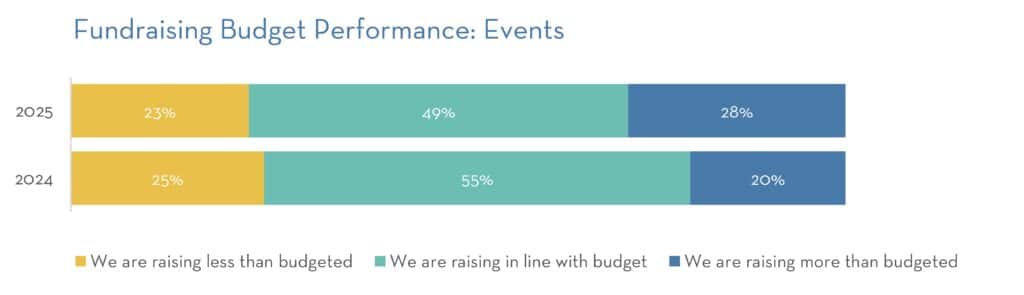
Organizations who either held exclusively in-person events or a mix of in-person, hybrid, and/or virtual events continued to be standout performers in 2025.
- 80% of nonprofits hosting only in-person event met or surpassed their fundraising goals.
- 78% of nonprofits hosting a mix of in-person, hybrid, and/or virtual events achieved the same success.
The contrast is stark for nonprofits that skipped events altogether. Nearly half (46%) of organizations that did not hold events raised less than budgeted, a sharp increase from 33% last year.
Looking ahead:
Events aren’t just back—they’re central to fundraising stability. Nonprofits relying on in-person or a mix of event formats continue to outperform their virtual-only peers, reinforcing the value of shared experiences, mission storytelling, and real-time donor connection. As organizations move into 2026, the need for stronger engagement systems and repeatable event strategies has never been clearer.
2. Rising Donor Challenges Are Pushing Nonprofits to Focus on Loyalty, Retention, And Acquisition
As nonprofits look to the year ahead, their top fundraising priorities are clear and closely aligned across the sector, with donor acquisition, donor retention, and recurring giving topping the chart.
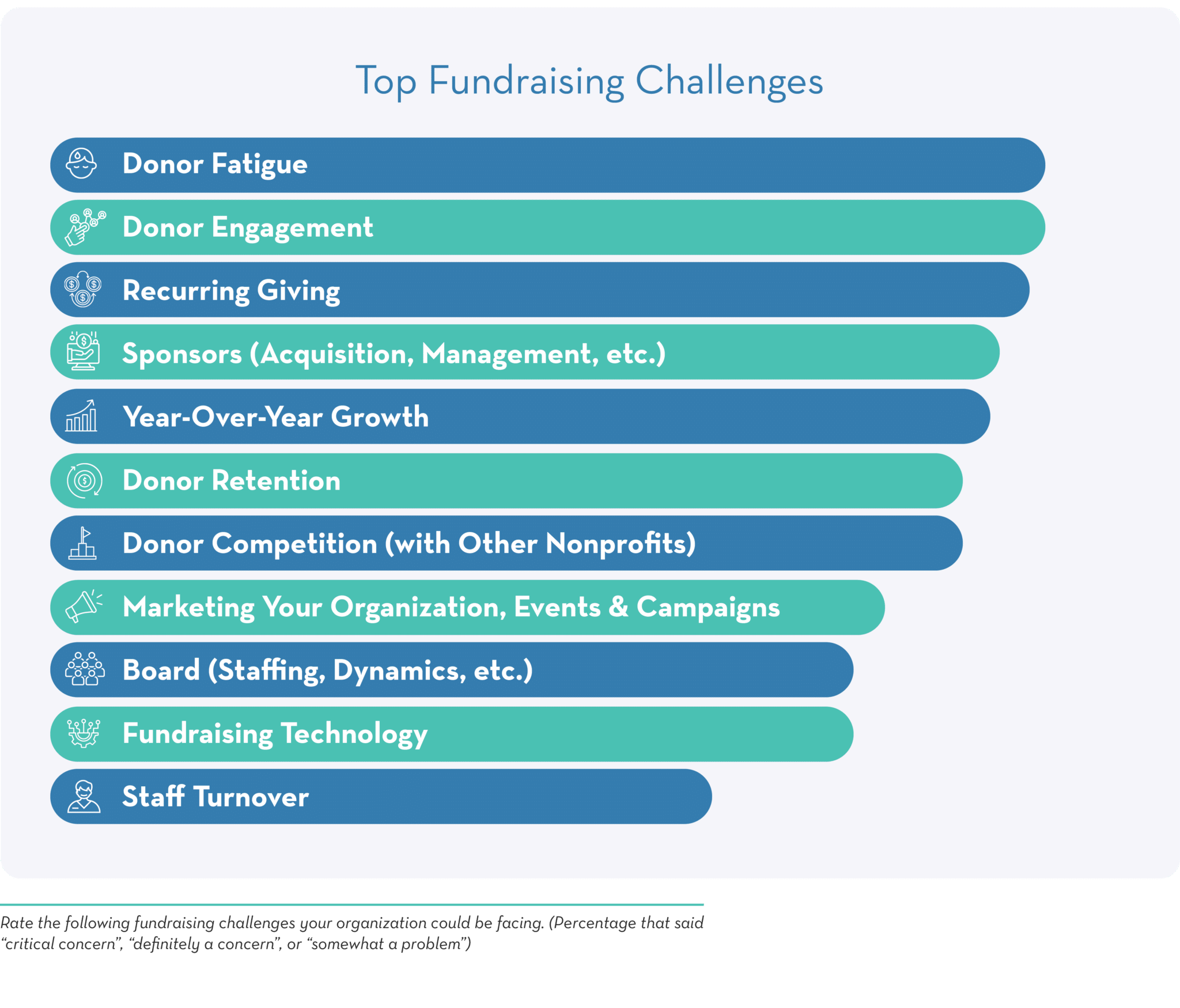
At first glance, acquisition and retention appear nearly identical in importance. But a closer look reveals something unexpected (and worth paying attention to). When focusing only on “critical” priority ratings:
- 58% say donor acquisition is critical
- 52% say donor retention is critical
This widening gap stands out because acquisition is typically the costlier, more resource-intensive strategy. The data suggests nonprofits may be responding to recent donor churn or broader funding instability, prioritizing acquisition as a way to quickly rebuild their pipeline. At the same time, it highlights the importance of doubling down on retention, where the long-term ROI is consistently stronger and more predictable.
Looking ahead:
Success in 2026 will require a balanced approach that brings new supporters in the door while intentionally deepening loyalty among those already invested in the mission. Organizations that invest in stewardship, strengthen donor journeys, and develop retention-driven communication strategies will be better positioned for long-term resilience.
3. Structured Event Ambassador Fundraising May Be the Key to Unlocking Supporter Growth
This finding really builds on the first two.
We know events are performing well.
We know nonprofits are feeling pressure around donor engagement and retention.
So the question becomes: how do you grow without putting more strain on already stretched teams?
Supporters represent a major opportunity — and a significant gap. While 96% of nonprofits say it’s important to utilize supporters more effectively, 40% have never asked supporters to help fundraise around events, and only 11% who have asked feel very effective at it.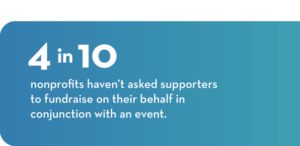
For many organizations, supporter involvement is still informal: a shared link here, a few invites there. Without structure, it’s difficult to track impact, recognize effort, or repeat success.
The data suggests that structure is what changes the outcome.
When supporter fundraising is organized — with clear roles, defined goals, and centralized tracking — it becomes more effective, more scalable, and easier to manage. Event ambassador models give supporters a meaningful way to contribute while helping nonprofits extend reach and build momentum earlier in the event cycle.
Looking ahead:
As nonprofits plan for 2026, structured event ambassador fundraising represents a significant opportunity. Organizations that move from informal supporter help to intentional, trackable event ambassador fundraising strategies will be better positioned to unlock growth, deepen engagement, and make events work harder without adding strain to staff teams.
4. Artificial Intelligence Is Gaining Traction as Nonprofits Grow More Confident with Technology
Not long ago, AI felt abstract for a lot of nonprofits — interesting, but not always practical. That’s starting to change.
The biggest growth showed up in copywriting and content creation. In 2025, 56% of nonprofits reported using AI for tasks like appeal letters, grant writing, and impact statements, up from 38% last year.
We also saw strong gains in fundraising workflows, including event planning, auctions, and general task support. Usage in this area jumped from 30% to 48%, signaling that nonprofits are getting more comfortable using AI beyond just writing — and into operational support.
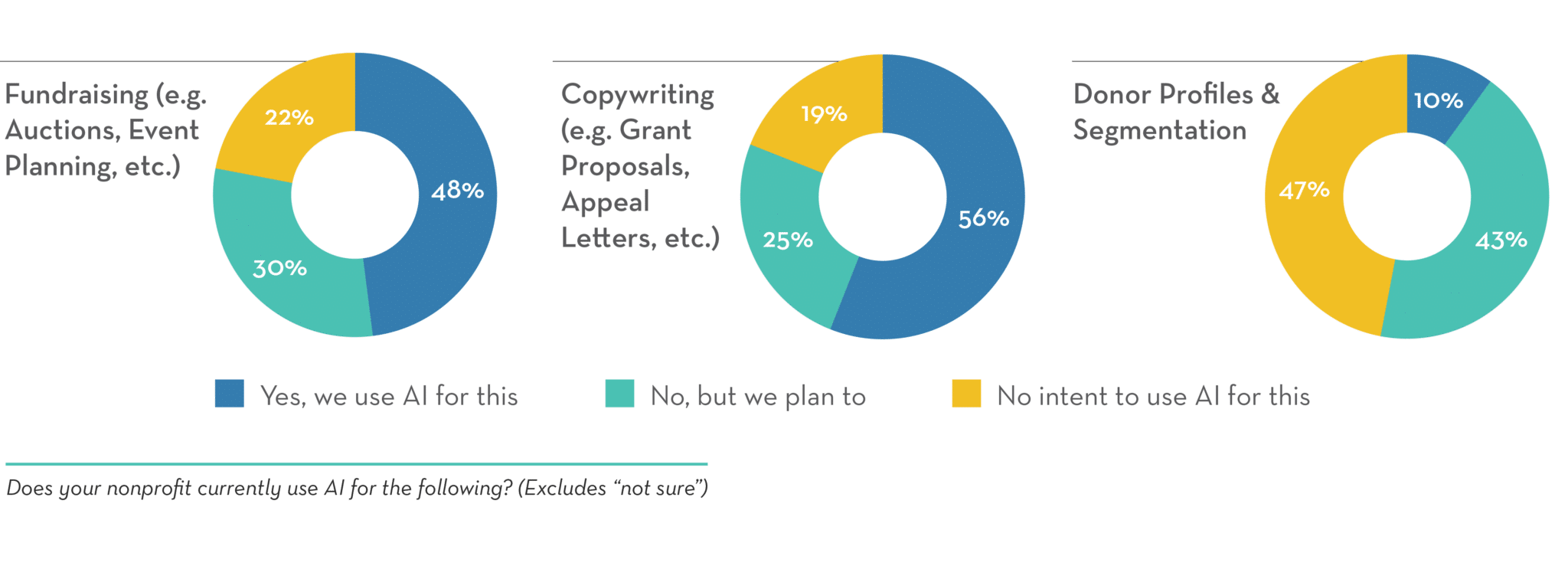
At the same time, fewer nonprofits are opting out entirely. The share of organizations saying they have no intent to use AI declined, reinforcing that resistance is giving way to cautious experimentation.
What’s important here isn’t just the numbers, it’s what they represent. Nonprofits are starting where AI delivers immediate, low-risk value: saving time, reducing administrative lift, and helping small teams keep up with demand. As confidence grows, so does willingness to explore more strategic applications.
Looking ahead:
In 2026, AI will continue to move from experimentation to operational support. Nonprofits that use AI to streamline workflows and support staff capacity, while keeping human connection at the center, will be better positioned to do more with less and sustain momentum in a demanding fundraising environment.
5. Nonprofits Are Doubling Down on Events As a Reliable Way to Close Gaps Created by Lost External Funding
This finding ties everything together. As external funding becomes less predictable, nonprofits are being forced to make hard decisions about where to focus. The data shows a clear trend: events are playing a big role in filling funding gaps.
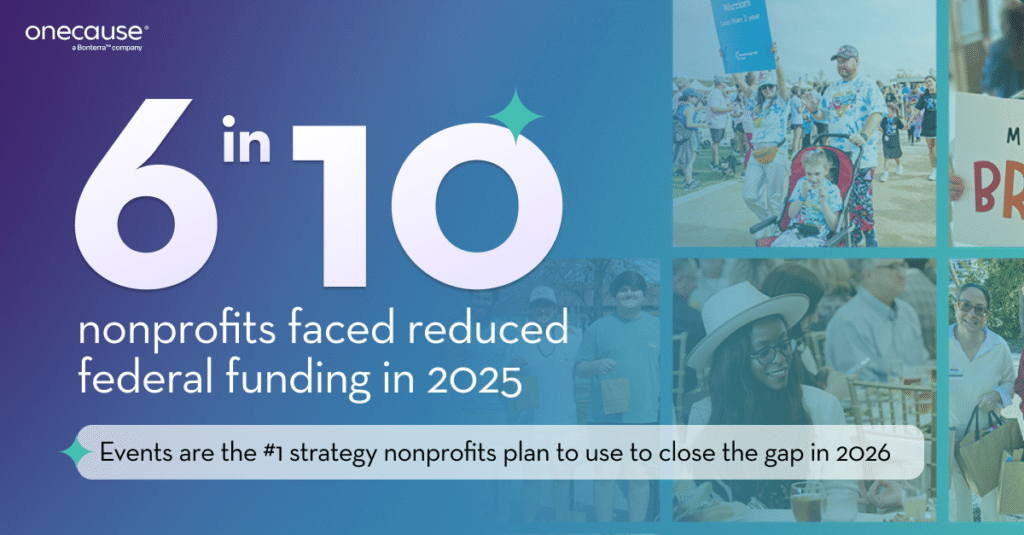
In the past year, 60% of nonprofits experienced funding or grant loss. For many organizations, that loss wasn’t small — it created real, immediate pressure to replace revenue.
So where are nonprofits turning?
When asked which strategies they plan to rely on to help close funding gaps in 2026, events ranked as the #1 approach, ahead of corporate sponsorships and major gifts.
This reinforces what we saw earlier in the data: events aren’t just performing well, they’re becoming a stabilizing force. They offer nonprofits something increasingly rare in today’s environment: a controllable, repeatable way to generate revenue while engaging supporters at the same time.
Unlike grants or external funding, events give organizations more ownership over outcomes. They create opportunities to activate donors, ambassadors, sponsors, and communities in ways that extend well beyond a single night.
Looking ahead:
As nonprofits prepare for 2026, events will continue to play a central role in revenue strategy — not just as fundraising moments, but as engines for engagement, acquisition, and supporter-driven growth. Organizations that invest in stronger event strategies, earlier activation, and more intentional supporter involvement will be better positioned to close funding gaps and sustain momentum in the year ahead.
What This Means for 2026
The takeaway is simple: nonprofits aren’t standing still.
They’re leaning into events because they work. They’re paying closer attention to donor relationships. They’re starting to activate supporters more intentionally. And they’re using technology to make all of that more manageable.
As 2026 approaches, the organizations that focus on what’s proven, and stay flexible as things shift, will be in the strongest position to move forward.